

A polished profile can still point to a business that isn’t real. To tell if a local listing is fake, look for details that don’t line up: unclear verification, suspicious review patterns, unusually low prices, questionable service-area claims, or promises of availability that seem too good to be true.
It makes sense to pause before calling. A listing can look convincing at a glance, and one unusual detail by itself may not tell the whole story.
This guide shows you how to weigh the signs together. Learn what verification can tell you, how to assess reviews and pricing claims, and what mismatches in service area or availability may mean. These checks can help you make a more informed decision before sharing details or arranging a service.
Key Takeaways
- Look for mismatches between a business name, contact details, address, and platform verification before you call.
- Review patterns can be more revealing than a high rating alone; notice whether feedback feels specific and consistent.
- Compare pricing, service-area details, and availability claims for inconsistencies that deserve caution.
- For local discovery and community connections, Sahayy brings events, groups, services, and a marketplace together in one app.
Business listing platform verification and fraud detection
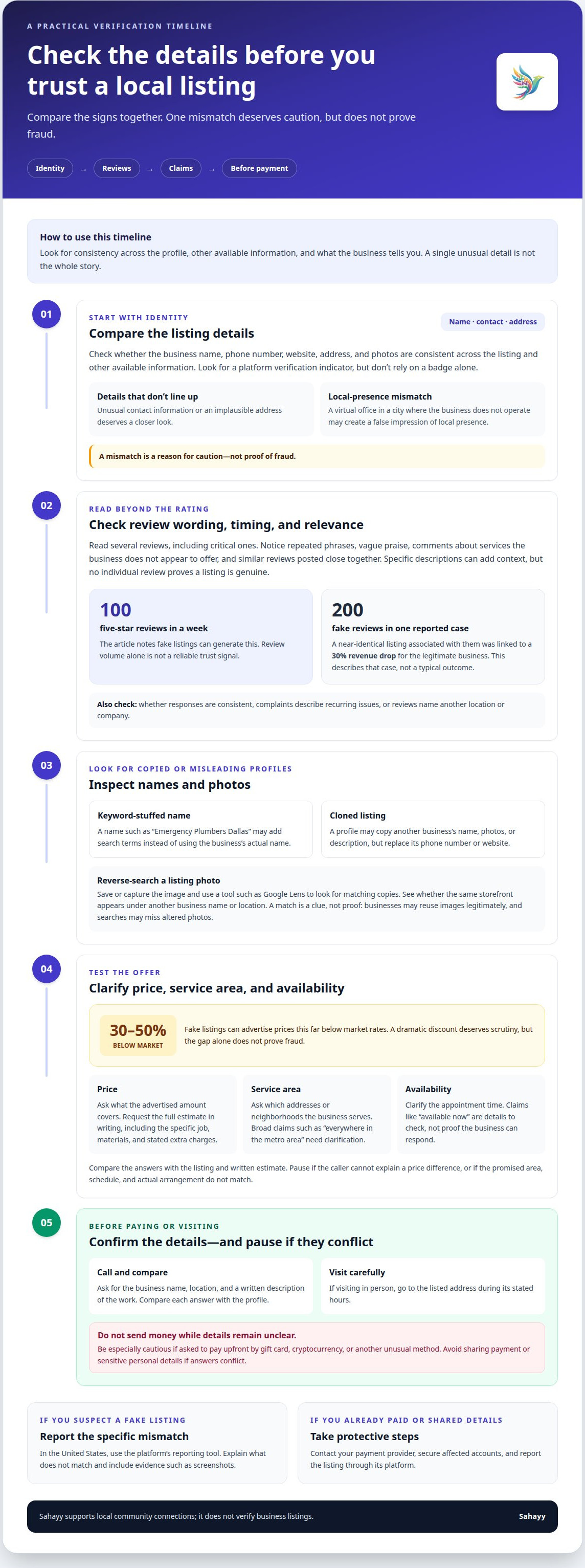
To tell if a local listing is fake, compare its details rather than relying on a single badge. Check whether the business name, contact information, address, and photos are consistent across the listing and other available information.
Warning Signs in Business Listings
A suspicious listing may combine mismatched details, unusual contact information, or an implausible address. For example, a virtual office in a city where the business does not operate may create a false impression of local presence. Look for a platform verification indicator, then compare the listed name, phone number, website, and address. A mismatch is a reason for caution, not proof of fraud.
Keyword-Stuffed and Cloned Listings
A keyword-stuffed name adds search terms instead of using the business’s actual name, such as “Emergency Plumbers Dallas.” A cloned listing may copy another business’s name, photos, or description but replace its phone number or website, potentially indicating a hijacked profile. Check whether the name identifies a real business or reads like a string of search terms.
In the United States, report a suspected fake listing through the platform’s reporting tool. Explain the specific mismatch and include evidence, such as screenshots.
Reverse-Searching Listing Photos
A reverse image search checks whether a listing photo also appears elsewhere online. Save or capture the image, then use a tool such as Google Lens to look for matching copies. See whether the same storefront appears under another business name or location. A match is a clue, not proof: businesses may reuse images legitimately, and searches may miss altered photos.
Contacting or Visiting Before Paying
Before paying, call the listed number and ask for the business name, location, and a written description of the work. Compare each answer with the profile, and avoid sharing payment or sensitive personal details if they conflict. For an in-person visit, go to the listed address during its stated hours. A local support network can help you find community connections, including ways to build a support network abroad. If you already paid or shared personal information, contact your payment provider, secure affected accounts, and report the listing through its platform.
Fake reviews and customer confusion
The question of how to tell if a local listing is fake often starts with its reviews. A listing can look established after a sudden wave of praise, but timing and wording deserve a closer read. Fake listings can generate 100 five-star reviews in a week, so review volume alone isn’t a reliable trust signal.
Read several reviews, including critical ones. Watch for repeated phrases, vague praise, or comments about services the business does not appear to offer. Compare dates and details: similar reviews posted close together may deserve scrutiny. Specific descriptions of a visit or completed job offer useful context, but no individual review proves a listing is genuine.
Check whether the business responds consistently and whether complaints describe a recurring issue. A small number of reviews can accompany a questionable profile, while a high total does not establish authenticity. Consider the overall pattern rather than treating any single rating as decisive.
For readers asking how to tell if a local listing is fake, customer confusion is another clue to consider. A near-identical listing associated with 200 fake reviews was linked to a 30% revenue drop for the legitimate business in one reported case. That figure describes that example, not a typical outcome. Reviews naming another location or company may blur which business a customer is contacting.
When settling into a new place, find local community connections alongside your own careful review checks.
The forum starter described a suspected fake listing as having 2 reviews. That example is a reminder that review counts need context: a small total does not settle whether a profile is trustworthy, just as a large total cannot establish that it is genuine. Readers can weigh the wording, timing, and relevance of comments alongside other details on the listing, and remain cautious when the information does not clearly identify the business.
Misleading prices, service areas, and availability claims
A low advertised price or broad service promise can prompt people to call quickly. Before agreeing to pay, compare the listing’s claims with the written estimate and the business’s stated location.
Misleading Price Claims
A misleading price makes a service seem far cheaper than its actual advertised scope. Fake listings can advertise prices 30-50% below market rates, so a dramatic discount deserves careful scrutiny. That gap alone doesn’t prove fraud, but it may signal a bait price that changes once the customer calls.
Ask what the advertised amount covers and request the full estimate in writing. Compare the price with the specific job, materials, and any stated extra charges. If the caller cannot clearly explain a difference between the advertisement and estimate, pause before paying.
Service Area and Availability Claims
A service-area claim says where a business works, while an availability claim describes when it can respond. Both matter because a listing may promise help in a location or at a time the business cannot actually serve. Treat claims like “everywhere in the metro area” or “available now” as details to clarify, not proof of local coverage.
Before booking, ask which addresses or neighborhoods the business serves and what appointment time it is offering. Compare the answers with the listing and written estimate. A mismatch between the promised service area, schedule, and actual arrangement may indicate misleading advertising or that the business is not prepared to do the work.
If a business demands upfront payment by gift card, cryptocurrency, or another unusual method, do not send money while details remain unclear. Request a written estimate and a clear explanation of the payment terms first.
Sahayy
Sahayy helps people living abroad find local connections through its community platform, not by verifying business listings. If a listing raises doubts, keep using the checks above; for broader neighborhood discovery, Sahayy brings local events, groups, services, and a Community Marketplace together in one app. Event Discovery and Posting helps people find or share community activities, while Commy AI Assistant answers queries in multiple languages.
These tools can help you learn about your new community and connect with people nearby. They aren't a replacement for checking a business’s details before paying or sharing personal information. If you’d like to learn more about connecting through Sahayy, contact Sahayy.
Make your next local connection with care
Knowing how to tell if a local listing is fake helps you make more considered choices, but it doesn’t have to stop you from getting to know your neighborhood. Keep business decisions grounded in the details you can assess, and use community connections to discover local life beyond a single listing. Sahayy supports people living abroad as they find events, groups, and services in their communities. It isn’t a business-listing verification service, so use the checks in this guide before making payments or sharing sensitive information.
If you’d like to explore community connections through Sahayy, you’re welcome to reach out.
One thoughtful step at a time can make an unfamiliar neighborhood feel more welcoming.
Frequently Asked Questions
How can I verify a local business's address and phone number?
Call the listed number and ask the person who answers to confirm the business’s full name and street address. Search the phone number and address separately to see whether they consistently point to the same business. If the listing gives a service-area address rather than a customer-facing location, ask how appointments are handled before arranging a visit.

Article by
Vinay Patil
Vinay Patil is the founder of Sahayy, a community platform inspired by his own experience of moving to a new country and having to figure out things that someone already there could have answered in minutes. He believes that belonging is built through small acts of helping — sharing an event, answering a question, recommending a service, or simply connecting someone with the right people. With nearly two decades of experience in technology, Vinay is building Sahayy to make it easier for people to find trusted communities and feel at home, wherever they are in the world.
More at https://vinaypatil.com


