

A German electricity bill is more than a charge for the power you used. Your bill can still differ because your usage and tariff shape the amount you pay.
If the line items feel unfamiliar, that’s understandable, especially when you’re settling into a new home. This guide explains how electricity charges fit together, what meter readings and estimated payments mean, and how to compare tariffs beyond the headline rate. You’ll learn how actual consumption affects the bill, which charges are shared across suppliers, and which tariff details can change your total. By the end, you can review the figures and see what each one represents and where to focus your attention.
Key Takeaways
- Compare tariffs by looking beyond the headline rate to see how the unit price and other charges shape your bill.
- Understand how meter readings and estimated payments affect the amount you’re charged, and why actual usage matters.
- Learn what the main electricity bill components represent so you can read each line with more confidence.
- Use Sahayy to discover local events, communities, and marketplace listings as you settle into life in Germany.
Electricity bills and choosing an energy tariff
Your electricity bill reflects both your tariff and the energy your household uses. Comparing those two parts helps explain your payment balance and what could change it.
Energy Costs and Payment Balance
An energy-cost overview shows how charges and payments combine into a balance: either an amount still to pay or a credit. These figures describe the billing period, not what every household will pay. If your payments exceed the final amount due, the supplier may refund the difference.
Base and Per-kWh Energy Prices
The base charge is fixed, while the per-kWh price depends on how much electricity you use. Compare both when reviewing tariffs: a low kilowatt-hour rate may not mean a lower total if the base charge is higher. Household size, appliances and daily habits all affect consumption, so consider your usage alongside the advertised rate. Reducing unnecessary energy use can lower the consumption-based part of your bill, but the fixed charge remains.
The renewable energy surcharge ended in mid-2022. Immediately before elimination, it was 3.72 ct/kWh, so older bill examples may show a charge that no longer applies.
To switch electricity or gas providers, compare tariffs, check your current contract’s notice period and end date, then arrange the new contract’s start date. Cancellation rules depend on the contract terms, including the stated deadline and method.
If you miss a utility payment, the amount remains outstanding. Respond promptly to supplier notices and arrange payment. Any late charges or disconnection process depend on the applicable terms and procedures.
Electricity bills and meter readings
Your meter reading links household consumption to electricity charges for a specific billing period. It’s central to understanding your German utility bill because it helps distinguish actual usage from estimates. Check the dates covered, the readings shown and whether the supplier used an actual or estimated figure. These details can explain why a monthly payment differs from the final amount owed.
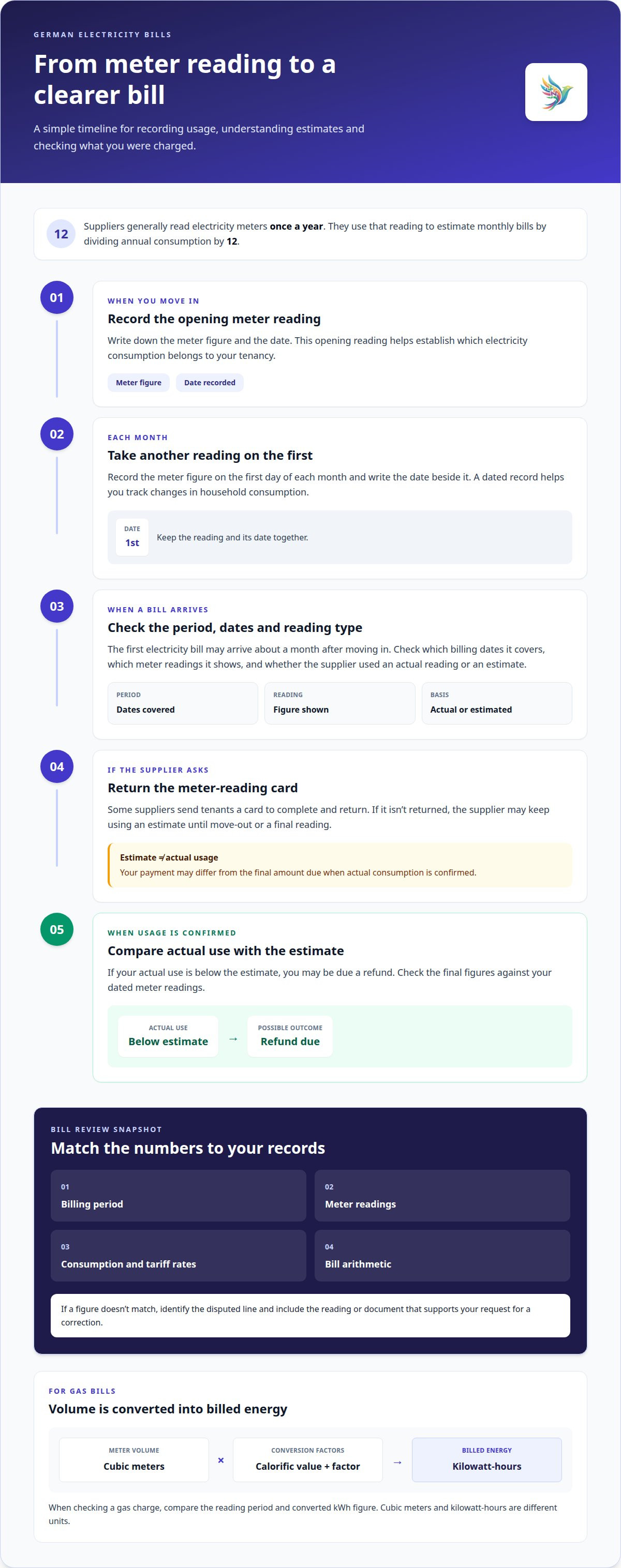
German utility companies generally read electricity meters once per year. They use the reading to estimate monthly bills, dividing annual consumption by 12. Compare the estimated usage with the meter figures and dates shown on your bill. The first electricity bill may arrive about a month after moving in, so an opening reading helps establish which consumption belongs to your tenancy.
Record the meter reading when you move in, then take another reading on the first of each month. Write the date beside each figure to track changes in consumption. Some suppliers send tenants a meter-reading card to complete and return. If it isn’t returned, the supplier may continue using an estimate until move-out or a final reading. If your actual use is below the estimate, you may be due a refund.
Gas bills convert meter volume into billed energy. The calculation multiplies the measured gas volume in cubic meters by the calorific value and conversion factor to produce kilowatt-hours. These factors translate the volume recorded at the meter into energy consumption, which is priced using your tariff. When reviewing a gas charge, compare the reading period and converted kWh figure: cubic meters and kilowatt-hours are different units.
German electricity bill components
An electricity bill combines charges for energy, grid access, taxes and levies. Separating these items helps show which amounts relate to consumption and which are regulated charges.
In 2025, grid fees, including metering and associated services, made up 27.6% of Germany’s average electricity price. The electricity tax was 2.05 ct/kWh, and the concession levy was 1.67 ct/kWh. Electricity sales tax is 19% of the pre-tax electricity price. These items help explain why the total is more than the supplier’s per-kWh energy price.
Legally prescribed charges, network charges and network-operation surcharges are collected and passed on in the same way by all energy suppliers. A balancing surcharge covers the expected shortfall from using control and balancing energy. When comparing tariffs, focus on the supplier’s energy price and base charge: shared network and statutory charges don’t distinguish one supplier’s offer from another.
Tenants in Germany may pay Nebenkosten, or additional housing costs, such as cold water, sewage, trash collection, chimney sweeping, heating fuel, insurance and electricity. The items depend on the housing arrangement and the bills being reviewed. Electricity may be billed separately, so check the bill issuer and billing period before comparing amounts.
To check a bill, compare its billing period, meter readings, consumption, tariff rates and arithmetic with your records. If a figure doesn’t match, write to the supplier or billing party, identify the disputed line and include the reading or document supporting your request for a correction.
Sahayy
As you settle into life in Germany, Sahayy can help you build local connections. Understanding electricity charges is one part of making a home; finding community can make the wider transition feel more manageable.
With the Sahayy Mobile App, you can discover local events, join groups and explore the Community Marketplace. Events helps you find, post and manage activities, while Commy, Sahayy’s AI assistant, answers queries in multiple languages based on what’s posted in your community. These tools help you connect locally; they don’t replace your supplier’s guidance on a specific bill or tariff.
If you’re looking to meet people or find local activities while settling in, explore Sahayy and contact the team with your questions.
Make your next step feel more familiar
Understanding your German utility bill can help you approach household energy decisions with more confidence. Settling in also means building everyday routines and finding people who understand local life. Keep household documents together, note questions as they arise, and look for community connections that make unfamiliar systems feel less isolating.
Sahayy helps you connect locally, not manage supplier billing or provide tariff advice. Use the app to discover activities, share events and connect with people nearby. For questions about your account, contact the supplier named on your bill. To find local connections as you settle in, explore Sahayy.
Small steps can make a move feel more manageable and help your new home feel like yours.
Frequently Asked Questions
What charges appear on a German electricity bill?
A German electricity bill can include energy supply, grid fees, metering, levies, and taxes. In 2025, the electricity tax was 2.05 ct/kWh, and the concession levy was 1.67 ct/kWh. Electricity sales tax was 19% of the pre-tax electricity price. Look at each line alongside its unit: a per-kWh charge changes with consumption, while other charges may be listed separately.
How do I read the meter readings and electricity usage on a German utility bill?
Find the meter readings and billing dates, then compare the start and end figures to understand the recorded usage. If the bill uses an estimated reading, for example, it may not match a reading you recorded yourself. Note the meter identifier too, especially if your home has more than one meter, so you compare the right device and period.
What are the differences between a monthly advance payment and the final annual bill?
A monthly advance payment is based on expected electricity use, not a final calculation of the amount owed. The final bill compares payments already made with charges for recorded consumption. If your advances were too low, you’ll have a balance to pay; if they exceeded the actual charges, the supplier refunds the difference. Keep payment records so you can compare the total paid with the final statement.
How are electricity prices per kWh and basic monthly charges shown on German bills?
The per-kWh rate applies to the electricity you use, while the base charge is a fixed part of the tariff. A bill may show the rate in ct/kWh and list the base charge separately for the billing period. To understand the calculation, multiply the billed kWh by the applicable unit rate, then add the base charge and other listed items.
What is the renewable energy surcharge, and which taxes and levies are included in German electricity bills?
The EEG renewable energy surcharge was a charge associated with Germany’s renewable energy funding system; it was eliminated in mid-2022. Immediately before its elimination, it was 3.72 ct/kWh. Current bill components can include electricity tax, concession levy, grid-related charges, and sales tax. If an older bill or tariff document lists the surcharge, check the period it covers before comparing it with current charges.

Article by
Vinay Patil
Vinay Patil is the founder of Sahayy, a community platform inspired by his own experience of moving to a new country and having to figure out things that someone already there could have answered in minutes. He believes that belonging is built through small acts of helping — sharing an event, answering a question, recommending a service, or simply connecting someone with the right people. With nearly two decades of experience in technology, Vinay is building Sahayy to make it easier for people to find trusted communities and feel at home, wherever they are in the world.
More at https://vinaypatil.com


