

What if your next career opportunity begins with a community, not a job application? Professional networking for foreign workers means building and maintaining relationships with people in your field to learn from them and share what you can offer. Those connections can grow online, at work, or through local events.
Starting fresh in another country can make it harder to know whom to meet or where to begin. You don’t need a perfect introduction or an immediate job lead. A genuine conversation is a useful first step.
This guide explains how networking can help you connect with recruiters, build career and business opportunities, and find professional communities. You’ll find practical ways to start conversations, maintain relationships, and discover groups that help you feel more connected in your new home.
Key Takeaways
- Build recruiter relationships before you need a new role, and start conversations with curiosity rather than an immediate request.
- Use professional connections to discover career leads, practical knowledge, mentors, and potential business opportunities.
- Explore local professional groups, associations, events, and interest-based communities to meet people in your area.
- Use Sahayy’s event discovery, community features, AI assistant, and marketplace to find ways to connect with people living abroad.
1. Building relationships with recruiters and headhunters
Build international connections before you travel by contacting professionals in your destination country. Use digital networks to find people in your field, then send a short message introducing your background and asking one question about their career path. An informational conversation helps you learn without opening with a request for a job or referral.
When approaching a recruiter, request a 15-minute introductory call and briefly describe the roles that match your experience. Keep a first networking conversation to less than thirty minutes, and show genuine curiosity about the other person’s work. Before a meeting, prepare one specific question about hiring expectations or skills employers value.
A purposeful network starts with clear goals and something useful to contribute. Consider what advice, industry knowledge, or introductions you hope to gain, and what you can share in return, such as a relevant article or insight from your previous market. After a helpful exchange, ask if they recommend someone else to contact. Keep relationships active by checking in a few times each year, not just when you need support.
For U.S. employers, keep early conversations informational: discuss role expectations, skills, and hiring processes rather than offering to do work. Visa conditions depend on your status and activity, so seek qualified immigration advice before accepting a work trial or assignment.
Mentoring conversations and unpaid volunteering can involve different activities. Don’t assume unpaid work is automatically permitted. Review the specific duties and your visa conditions before agreeing to volunteer or take on tasks.
To ease language or cultural barriers, prepare a brief introduction and one simple question, such as how someone entered their field. Choose a virtual exchange or coffee meeting that feels comfortable, and use a support network abroad to discover ways to connect locally.
2. Career and business benefits of networking
Professional networking for foreign workers can open career opportunities, build industry knowledge, and introduce you to mentors or potential collaborators. A colleague might share a useful learning resource, explain how an organization hires, or connect you with someone facing a similar business challenge. These relationships can also make remote work feel less isolating.
Connections can help reveal openings through channels beyond job boards. The 2022 Jobvite Recruiter Nation survey found that 39% of job seekers discovered job openings through social media. A LinkedIn study found that 80% of professionals said networking was essential to their career success. Treat each exchange as mutual: share relevant knowledge, then ask thoughtful questions.
Professional networking for foreign workers also helps build trust across different work cultures. Introductions work best when they’re specific and useful to both people. Before connecting two contacts, explain how you know each person and why their interests might align. For example, you could introduce a newcomer with local market experience to a business owner seeking insight into that market. Providing context helps both people decide whether a conversation would be useful.
Professional associations and networking groups in the U.S. don’t have a standard cost. Expenses vary by organization, membership structure, location, and whether activities are in person or virtual. Before choosing a group, compare what membership includes, such as event access or learning resources. The Centers for Disease Control and Prevention (CDC) reports that most foreign farm workers received job information from relatives, friends, or acquaintances, illustrating how existing relationships can share practical leads.
For a low-pressure next step, look for relevant local events and share ones that could help your contacts. Explore event discovery and posting to find or share opportunities for professional connection.
3. Finding networking communities
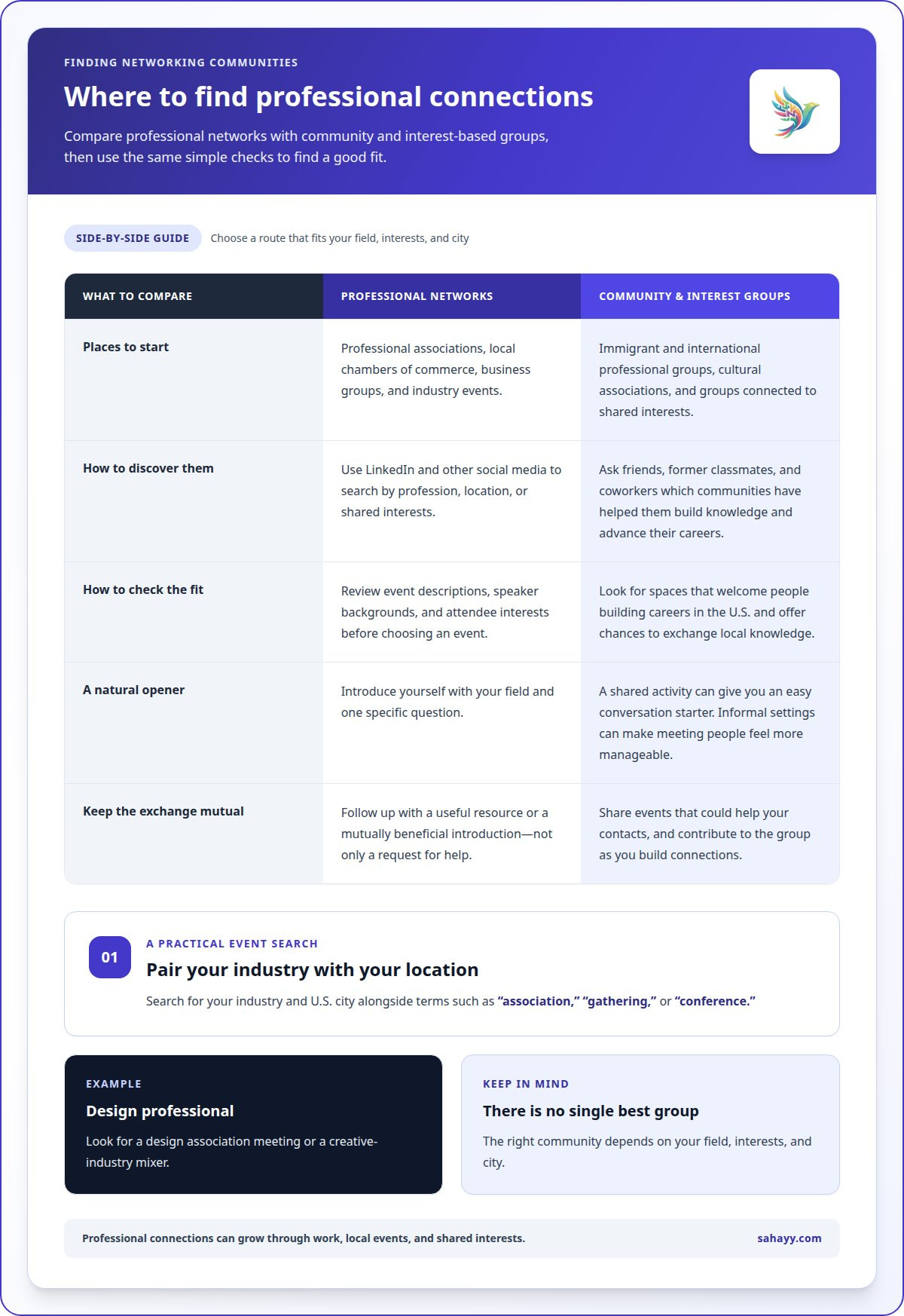
Start with professional associations, local chambers of commerce, business groups, and industry events. LinkedIn and other social media can help you find groups by profession, location, or shared interests. Ask friends, former classmates, and coworkers which communities have helped them gain knowledge and advance their careers.
To find events in your U.S. city, search for your industry and location alongside terms such as “association,” “gathering,” or “conference.” Review event descriptions, speaker backgrounds, and attendee interests to find a good fit. A local design professional, for example, might look for a design association meeting or a creative-industry mixer.
Immigrant and international professionals can look for community groups, cultural associations, and professional networks that welcome people building careers in the U.S. These spaces can make it easier to exchange local knowledge and meet people with similar experiences. The right group depends on your field, interests, and city, not a single national list.
No city is best for everyone. Consider the local industries and communities that match your goals; for example, career-networking groups are listed in New York. At an event, introduce yourself with your field and one specific question. Follow up with a useful resource or a mutually beneficial introduction, not only by asking for help. That exchange can help you advance while contributing to the group.
People working abroad can use social groups related to their existing interests to meet others locally. A shared activity offers a natural conversation starter and can help build local connections.
If you’re nervous about meeting new people, informal social settings can make networking feel more manageable. An internship mixer or café language exchange offers a relaxed way to start conversations and get to know others before pursuing more formal professional connections.
Sahayy
Sahayy helps people living abroad discover local communities and practical ways to connect. Use the Sahayy Mobile App to explore events, groups, services, and marketplace listings in one place.
Events help you find gatherings or share one with others nearby. Commy, Sahayy’s AI assistant, answers questions in multiple languages based on what’s posted in your community. Groups, Services, and Marketplace listings also bring people together around local interests and needs, helping you discover what’s happening and connect with others.
Use Sahayy alongside the relationship-building steps in this guide: find a relevant event, start a conversation, and keep in touch when a connection feels valuable. For questions about connecting through the platform, contact Sahayy.
Make your next connection count
A professional connection can grow through small, thoughtful exchanges. Choose a community that fits your goals, take part in a conversation, and follow up with something useful. Over time, professional networking for foreign workers can become part of how you learn, contribute, and feel more connected in your field.
You don’t need to map out every career step before you begin. Start with one genuine interaction, stay curious about the people you meet, and let shared interests guide what comes next. Your experience and perspective have value in every professional community.
Each connection is a chance to build a sense of belonging and open a new path forward.
Frequently Asked Questions
What is Networking?
Networking is the intentional exchange of professional knowledge, perspectives, and support with people connected to your field. It can be as simple as discussing how a project works in another market or sharing an insight from your experience. The goal is to build a useful relationship, not collect contacts or treat every conversation as a request for a job.
Why do global connections matter?
Global connections help you see how professional practices and opportunities differ across places. Someone familiar with another market may offer context you wouldn’t find in a job description, while your own experience can bring value to colleagues there. These relationships can also support cross-border collaboration and help you understand how your skills fit into a wider professional community.

Article by
Vinay Patil
Vinay Patil is the founder of Sahayy, a community platform inspired by his own experience of moving to a new country and having to figure out things that someone already there could have answered in minutes. He believes that belonging is built through small acts of helping — sharing an event, answering a question, recommending a service, or simply connecting someone with the right people. With nearly two decades of experience in technology, Vinay is building Sahayy to make it easier for people to find trusted communities and feel at home, wherever they are in the world.
More at https://vinaypatil.com


