

Settling into life abroad takes practical support and opportunities to connect with people nearby. Expat community help with settling in can begin with language practice, local events, and groups, alongside support for everyday tasks.
It’s natural to focus on the logistics of a move, but feeling at home also comes from familiar faces and shared experiences. This guide covers ways to practise the local language, find events and groups that match your interests, and get practical help as you start life in a new place.
Key Takeaways
- Use language classes or exchanges to practise everyday conversation and create natural opportunities to connect.
- Explore cultural events, hobby groups, and meetups to find people with shared interests.
- Pair social connections with practical relocation support, choosing help that fits the tasks you need to handle.
- Use Sahayy’s event discovery and community marketplace to find local activities, groups, and services in one place.
Learning the local language
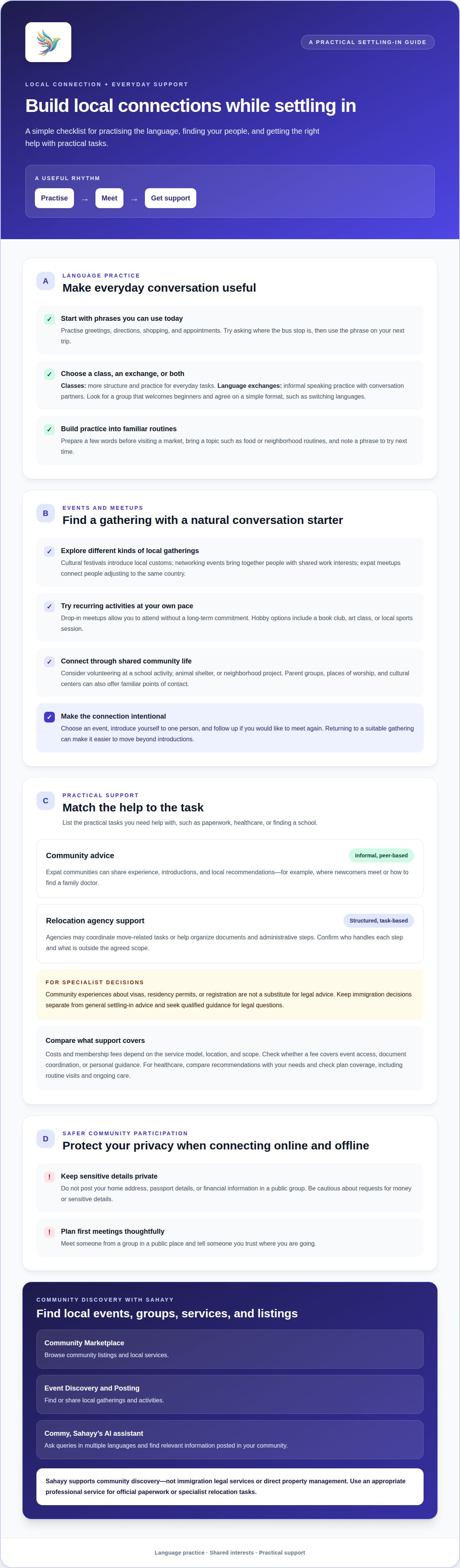
Set a practical first goal: learn phrases for greetings, directions, shopping, and appointments. A local language class can make everyday tasks easier and create opportunities to meet people. For example, practise asking where the bus stop is, then use the phrase on your next trip. Small, useful exchanges build confidence as well as vocabulary. In Korea, many people speak enough English to make interactions friendly, even when a language barrier remains.
Language exchanges are another way to practise. These social meetups let people work on conversational skills in another language. Find a group that welcomes beginners and agree on a simple format, such as switching languages during conversation. Bring a topic, like food or neighborhood routines, and ask for corrections when you want them. Classes offer more structure; exchanges provide informal speaking practice. Using both can support language learning without making every conversation feel like a test.
Online groups can help you find classes and language exchanges before or after arrival. Protect your privacy: don’t post your home address, passport details, or financial information in a public group. Be cautious about requests for money or sensitive details. Before meeting someone from a group, choose a public place and tell someone you trust where you’re going. These steps reduce avoidable risks while leaving room for genuine connection.
Build practice into familiar routines. Learn the words for a few items before visiting a local market, or rehearse a greeting before a class. After each exchange, note one phrase you used and one you want to try next time. This quick review helps turn new vocabulary into language you can use every day. A patient conversation partner can also explain local expressions that textbooks may not cover.
Attending local events and meetups
Choose gatherings that give conversation a natural starting point. Cultural festivals introduce local customs, while networking events bring together people with shared work interests. Expat meetups let you compare experiences with others adjusting to the same country. Local events can provide expat community help with settling in by creating regular opportunities to meet people nearby. Start with an event that feels manageable, then return if the people and setting suit you. Familiarity makes it easier to move beyond introductions.
For a regular routine, look for local expat groups that organize drop-in meetups. You can attend without committing to a long-term activity. Hobby groups offer another easy way in: join a book club, try an art class, or take part in a local sports session. Shared activities give people something to talk about, even when they arrive alone. A community calendar or event discovery tool can help you find nearby gatherings.
Volunteering combines social time with contributing to your new community. Consider a school activity, animal shelter, or neighborhood project that fits your interests. Parents can also meet other families through carpooling, birthday parties, and playdates. If you’re looking to connect around shared values, local places of worship and cultural centers can offer a familiar point of contact.
Make meeting people intentional: choose an event, introduce yourself to one person, and follow up when you’d like to meet again. This kind of expat community help with settling in makes it easier to build connections through repeated local contact. With Event Discovery and Posting, Sahayy helps people find and share local gatherings. Explore local events with Sahayy when you’re ready to turn a free evening into an opportunity to connect.
Recommended services for moving and settling abroad
Separate social guidance from specialist help before choosing support. Start by listing the practical tasks you need help with, such as paperwork, healthcare, or finding a school.
Community and Agency Support
Expat communities offer peer experience, introductions, and local recommendations. A neighbor might explain how to find a family doctor or where newcomers meet. Relocation agencies focus on structured practical assistance, which may include coordinating move-related tasks. Compare the scope: community advice is informal, while agency support is organized around agreed services. For complex tasks, identify who handles each step and what falls outside that role.
Visa and Local Registration Assistance
Communities can share personal experiences with visas, residency permits, and local registration, but those experiences aren’t a substitute for legal advice. Relocation agencies may help organize documents or coordinate administrative steps. The right support depends on the destination’s process and your circumstances. Keep immigration decisions separate from general settling-in advice, and seek qualified guidance for legal questions.
Costs and membership fees depend on the service model, location, and scope. An expat network may be open or membership-based; relocation support may be priced according to the tasks included. Compare what each fee covers, such as event access, document coordination, or personal guidance.
Use community recommendations to identify clinics and English-speaking doctors, then compare those options with your healthcare needs. Check the relevant plan’s coverage information, especially for routine visits and ongoing care.
Families can ask local parent groups about schools, childcare, and everyday routines. A newcomer, for example, might learn how school activities work or find family meetups through parent connections. Treat practical recommendations separately from enrollment decisions, which depend on each school and family.
Sahayy: Community Marketplace
Sahayy brings local events, groups, services, and listings together in its mobile app. Use the Community Marketplace to browse community listings, and Event Discovery and Posting to find or share local gatherings. Commy, Sahayy’s AI assistant, answers queries in multiple languages and offers another way to find relevant information posted in your community.
Use these tools to move from general advice to local connections, such as discovering a nearby group or browsing community listings. Sahayy supports community discovery, not immigration legal services or direct property management. For official paperwork or specialist relocation tasks, use an appropriate professional service.
Contact Sahayy to learn more about connecting with local communities.
Take Your Next Step Toward Feeling at Home
A sense of belonging abroad grows through small choices repeated over time: showing up, joining conversations, and following a local interest. Choose a manageable next step. Pick a community activity that fits your schedule, then give yourself time to get to know the people and place. A steady pace can make settling in feel more personal and less like a list of tasks.
Good expat community help with settling in supports connection while respecting your individual needs. Start with the kind of local interaction you’re ready for, whether that means exploring a group or finding an event. Each new connection can make an unfamiliar place feel easier to navigate.
Your new community takes shape one encounter at a time. Move at your own pace and let each step open the door to the next.
Frequently Asked Questions
What services do expat communities offer to help newcomers settle in?
Expat communities often provide peer guidance, introductions, social groups, and shared local recommendations. A newcomer might ask members which neighborhood has a convenient commute or how to find a family activity. These networks offer insight from people with local experience, but they don’t replace specialist help with legal, medical, or housing decisions.
Where can expats find local community groups, meetups, and online forums?
Look for groups through community platforms, social media, workplace networks, alumni associations, and neighborhood forums. Search by city and a specific interest, such as parenting, hiking, or a language community, to find more relevant conversations. Local libraries and cultural centers may also share event information. Read group guidelines before posting, and avoid sharing sensitive personal details publicly.
How do expat organizations help with housing, utilities, and finding a neighborhood?
Members can share neighborhood impressions, explain common rental terms, and describe how residents typically arrange household services. Treat those comments as leads, not property management or a guarantee about a listing. For example, ask about commute patterns or nearby amenities, then make housing and utility decisions through relevant providers and official channels.
What are the best ways for expats to learn the local language and culture?
Combine structured study with everyday cultural learning. Note phrases you hear at shops or community gatherings, then ask a trusted local contact what they mean and when they’re appropriate. Pay attention to local greetings, turn-taking, and event etiquette. This helps you understand context, not just vocabulary, and makes it easier to participate respectfully.
What local government or nonprofit settlement services are available to immigrants and expats?
Available support differs by country and municipality. Local government offices or nonprofit organizations may offer orientation, language-learning referrals, community information, or help understanding public services. Start by identifying the official municipal information channel and local newcomer organizations. For immigration decisions or legal questions, seek qualified advice rather than relying on informal group discussions.

Article by
Vinay Patil
Vinay Patil is the founder of Sahayy, a community platform inspired by his own experience of moving to a new country and having to figure out things that someone already there could have answered in minutes. He believes that belonging is built through small acts of helping — sharing an event, answering a question, recommending a service, or simply connecting someone with the right people. With nearly two decades of experience in technology, Vinay is building Sahayy to make it easier for people to find trusted communities and feel at home, wherever they are in the world.
More at https://vinaypatil.com


