

Belonging abroad grows through steady connections at work and in the community. Social integration for expats means learning local ways of working, meeting people through shared interests, and making room for new friendships alongside relationships back home. It takes time, and progress looks different for everyone.
Moving to a new country can be exciting, but unfamiliar customs, language barriers, and lonely moments can make connecting harder than expected. That’s a normal part of adjusting, not a sign you’re doing something wrong. With patience and regular chances to meet people, a new place can start to feel familiar.
This article explores ways to connect with coworkers, find community support, and build local friendships through activities and organizations. You’ll also learn how to stay close to loved ones back home while making space for life where you are now.
Key Takeaways
- Give yourself time to adjust; feeling settled at work and socially may happen at different paces.
- Look for shared-interest activities, local events, and community groups to create natural chances to meet people.
- Stay connected with loved ones back home while making regular space for local friendships to grow.
- Use workplace conversations, volunteering, and local organizations to turn familiar faces into meaningful connections.
Counseling, relocation advice, and community support
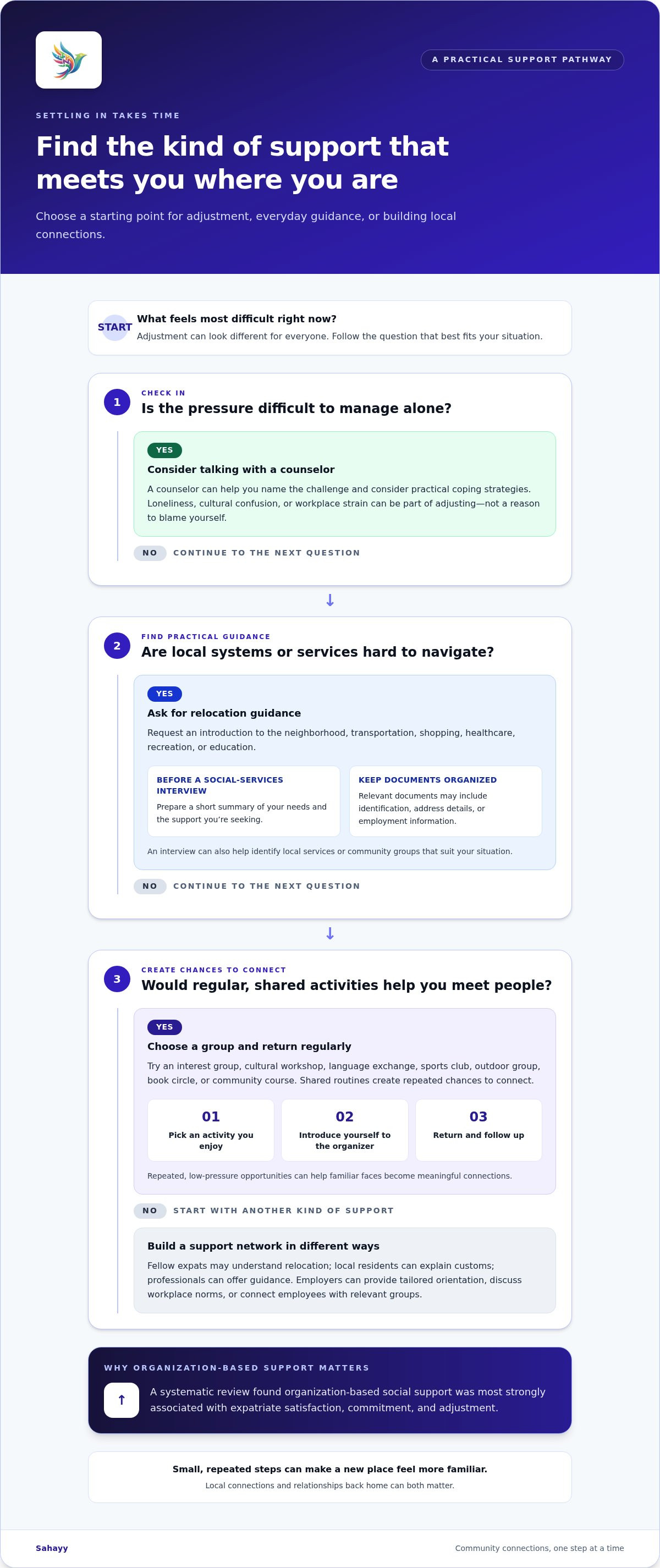
Professional adjustment and personal belonging can progress at different speeds. Even a successful move abroad may bring loneliness, cultural confusion, or workplace strain. Recognizing these as part of adjusting can help you respond with patience rather than self-blame. If the pressure feels difficult to manage alone, a counselor can help you name the challenge and consider practical coping strategies.
Relocation guidance can make everyday systems easier to navigate. Ask for an introduction to your neighborhood, transportation, shopping, healthcare, recreation, or education. For a social-services interview, prepare a short summary of your needs and the support you’re seeking. Keep relevant documents organized, such as identification, address details, or employment information, so you can explain your circumstances clearly. The interview can also help identify local services or community groups that suit your situation.
Organization-based support matters because shared routines create repeated chances to connect. Join an interest group, attend a cultural workshop, or take part in a language exchange. A systematic review found that organization-based social support was most strongly associated with expatriate satisfaction, commitment, and adjustment. For ideas on how digital communities can help with finding local groups, explore this guide to expat community apps.
Build a network with different kinds of support: fellow expats who understand relocation, local residents who can explain customs, and professionals who can offer guidance. Employers can help by providing tailored orientation and asking how employees are managing daily life. A manager might discuss commuting or workplace norms, while HR can connect an employee with relevant groups. These steps offer practical support and help create a stronger community around someone settling in.
Balancing relationships back home with local friendships
Staying close to family while building local friendships gives your social life room to grow in both directions. Set a regular time to call loved ones, then make space for nearby plans, such as coffee with a neighbor. This balance can support emotional stability without making every free evening feel like a choice between home and your new community.
Local relationships offer a fresh perspective on everyday life. Learn basic phrases in the local language, even if conversations start with simple greetings or questions at a market. When cultural differences arise, observe how people interact and ask gently rather than assume. A curious, positive approach can turn a misunderstanding into a useful exchange.
Workplace and social expectations vary across countries, so pay attention to the cues around you. Notice, for example, how colleagues take turns in meetings, extend lunch invitations, or give feedback. If a custom is unclear, ask a trusted coworker what is typical in that setting. Respecting local customs doesn’t mean giving up your own; it helps you communicate thoughtfully as you learn how others connect.
Friendship often develops through repeated, low-pressure opportunities. Return to the same class, sports group, or community event, and follow up with someone you enjoyed meeting. You might suggest a walk after a language exchange or invite a neighbor to a local festival. Organizations and interest groups can make these introductions feel more natural. To explore ways to find nearby connections, look for local community opportunities that match your interests. Keep making plans with friends back home, too. Both circles can matter.
How can expats integrate through work, volunteering, or local organizations?
Work offers regular chances to connect beyond formal meetings. Start with a brief conversation during a coffee break, then follow up on a colleague’s lunch recommendation or suggestion for a local activity. Collaborative projects also build familiarity: sharing ideas, solving a task, and recognizing each other’s strengths can open the door to friendship. Coworking spaces and professional events offer similar opportunities to meet people beyond your team.
Volunteering gives newcomers a shared purpose and a practical way to contribute. A local food drive, neighborhood clean-up, or international charity event brings people together around a clear task. Ask organizers what help they need, choose a role that matches your interests, and attend regularly. Familiar faces and repeated teamwork make conversation feel more natural over time.
Clubs and associations bring people together through shared interests rather than background. A sports club, outdoor group, book circle, or community course can be a comfortable starting point. Choose an activity you genuinely enjoy, introduce yourself to the organizer, and return for the next gathering. Regular participation creates more chances to move beyond greetings and have meaningful conversations.
Keep the first step manageable. At work, invite a colleague to take a break with you; in a volunteer group, ask how you can help at the next event. At a club, learn people’s names and show interest in their experiences. These small actions can make work and community spaces more welcoming, while shared effort helps build connections beyond the activity itself.
Sahayy: Sahayy Mobile App
Sahayy Mobile App helps people living abroad find community connections in one place. Use Event Discovery and Posting to explore local gatherings or share an event. When you’re looking for a group, activity, or practical local connection, these tools can offer an easy place to start.
Commy, Sahayy’s AI assistant, answers queries in multiple languages and can help you work out what to look for or ask. The Community Marketplace lets users post and explore listings. Together, these features support the everyday process of turning a new location into a more connected community.
Visit sahayy.com to explore Sahayy.
Make room for connection, one step at a time
Building a sense of belonging abroad doesn’t require changing who you are. Let social integration for expats develop through sustainable choices: showing up, staying curious, and allowing familiarity to grow naturally. Some weeks, connecting may mean joining a local event; other times, it may simply mean keeping a conversation going.
For a practical way to explore community connections, Sahayy brings event discovery and posting together in its mobile app. Commy, the AI assistant, can answer queries in multiple languages using information posted in the community. These tools can support your search for community alongside the relationships you build face to face.
Each small effort can make an unfamiliar place feel more personal. Take the next step at your own pace; connection can grow from there.
Frequently Asked Questions
What does social integration mean for expats?
Social integration for expats means taking part in everyday life while keeping your identity and relationships. It can involve understanding workplace expectations, finding local services, and feeling comfortable joining community activities. Integration doesn’t require abandoning your home culture. You might celebrate a familiar holiday with friends while also joining a neighborhood event that introduces you to local traditions.
What are the best ways for expats to make local friends?
Look for regular shared activities where conversation can grow naturally. A weekly class, community garden, or neighborhood walking group gives you something to discuss beyond introductions. Ask someone about their experience with the activity, then pick up the conversation next time. If you connect, suggest a simple follow-up, such as visiting a nearby café after class.
How can expats find social groups, clubs, and events?
Search by both interest and location, using phrases such as “beginner choir near me” or “weekend hiking group.” Local libraries, community centers, coworking spaces, and neighborhood noticeboards often share calendars or group information. Check whether an activity suits your schedule and interests, then attend an introductory session or public event. A shared interest gives you an easy opening for conversation.
Which apps and online communities help expats meet people?
Choose platforms that surface nearby activities and communities, rather than relying only on broad discussion feeds. Sahayy’s mobile app brings local groups, events, services, and marketplace listings together. Its Event Discovery and Posting tools help users find or share gatherings, while Commy answers queries based on information posted in the community. Review event details to decide what suits you.
How can expats overcome language and cultural barriers?
Use short, clear phrases and ask for clarification when a conversation becomes confusing. You could say, “Could you explain what that means here?” Repeat key details in your own words to make sure you understood. For written exchanges, translation tools can help with unfamiliar phrases. Treat differences as opportunities to learn, not as evidence of bad intent.

Article by
Vinay Patil
Vinay Patil is the founder of Sahayy, a community platform inspired by his own experience of moving to a new country and having to figure out things that someone already there could have answered in minutes. He believes that belonging is built through small acts of helping — sharing an event, answering a question, recommending a service, or simply connecting someone with the right people. With nearly two decades of experience in technology, Vinay is building Sahayy to make it easier for people to find trusted communities and feel at home, wherever they are in the world.
More at https://vinaypatil.com


