

Learning the local language can ease feeling lonely after moving abroad, but it won’t create close friendships on its own. It can make everyday interactions easier and help you connect with local people. Meaningful relationships still grow through shared interests, time together, and small invitations.
If you’ve relocated and feel cut off, that reaction makes sense: familiar routines and support networks have changed, while language barriers can make each new interaction feel harder. This guide explores how learning the local language can reduce that friction, why loneliness can persist even when you speak it, and practical ways to build connections around shared interests. You’ll also learn how loneliness abroad can feel, from missing home to feeling unseen in a crowd, and where to begin when building a new life feels slow.
Key Takeaways
- Learning the local language can make everyday interactions easier and open more ways to connect, but lasting friendships also need shared time and interests.
- Working remotely, living alone, and starting without a social circle can make it harder to build connections after a move.
- Try a local interest group and look for common ground to turn casual conversations into chances to spend time together.
- Missing home or feeling out of place can be part of adjusting; notice what you need and take small steps toward connection and support.
1. Barriers to meaningful connection after migration
Practical ways to cope with homesickness include establishing a steady routine, staying in touch with loved ones, and joining local groups. Start by naming what feels difficult, such as working remotely or spending evenings alone. Therapist Hope Kelaher notes that some people have less capacity for friendship since the pandemic. Rebuilding social habits can take practice, especially without familiar colleagues or nearby family.
Migration can also bring language barriers, unfamiliar customs, and repeated small interactions that don’t deepen into friendship. Around two-thirds of international students in Australia reported loneliness or isolation, especially during their early months. Try one manageable step: choose an activity you can repeat, such as a weekly class or neighborhood walk. A predictable routine creates familiar places to meet people and makes social contact easier to maintain.
Keep meaningful ties back home while making room for life where you are. Schedule a call with family or a friend, then take a moment to notice what you need that day. A short walk outdoors or a quiet meal can help you reset before reaching out locally. If a conversation with someone new feels promising, suggest coffee or ask for a book recommendation as an easy follow-up.
Expats can offer shared understanding, especially when local customs still feel unfamiliar. Look for a language class, hobby group, or gathering for newcomers, and attend more than once to let recognition grow into conversation. A meta-analysis covering 571,260 migrants, students, expats, and refugees found adaptation was most strongly tied to connectedness and not feeling lonely. Building that connection can include both expat friendships and gradual ties with local people.
2. Does learning the local language reduce loneliness?
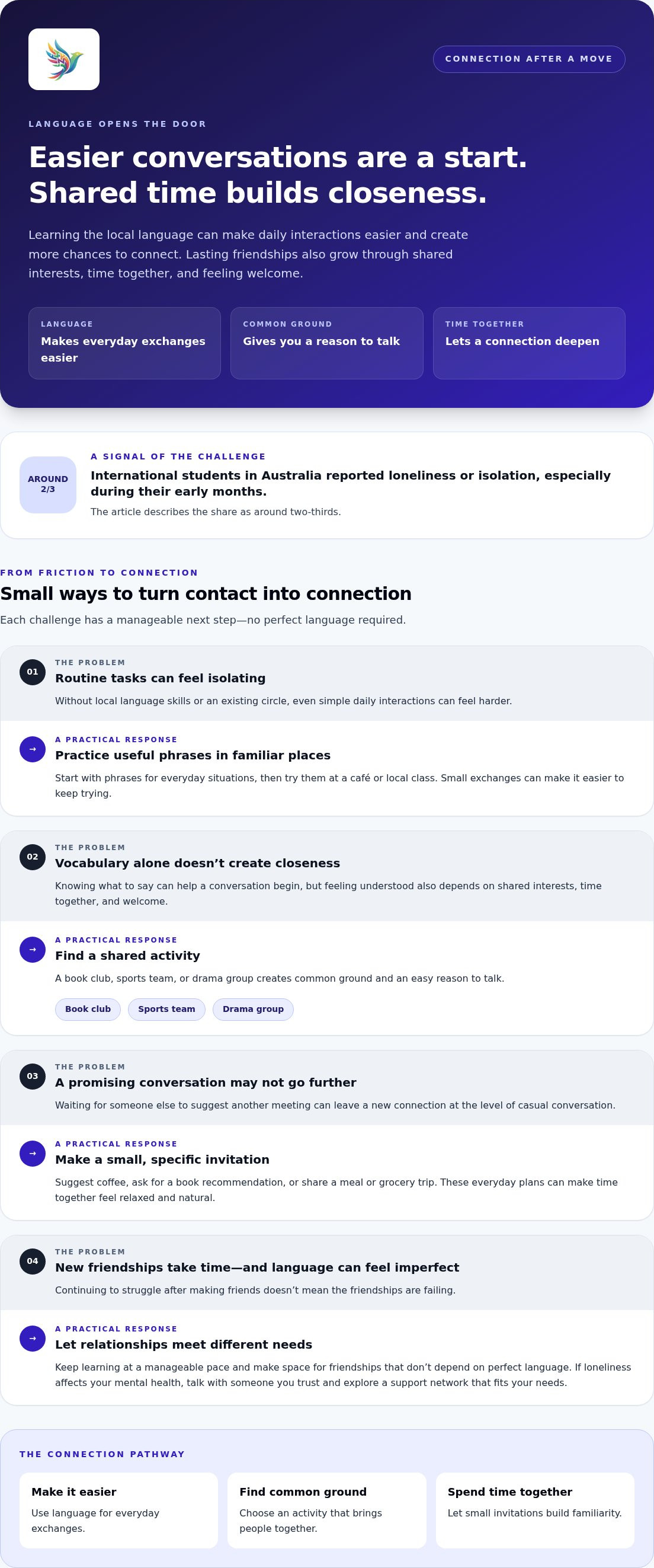
Yes, learning the local language can ease daily interactions and create more chances to connect with local people. It helps with simple exchanges, from greeting a neighbor to joining a conversation at a community event. But vocabulary alone can’t create closeness. Feeling understood also depends on shared interests, time together, and feeling welcome.
Without local language skills or an existing circle, even routine tasks can feel isolating. In 2016, one writer who moved to Istanbul described feeling lonely as a foreigner who spoke neither the language nor knew anyone there. Start with useful phrases for everyday situations, then practice them in familiar places, such as a café or local class. Small interactions can make it easier to keep trying.
To turn acquaintances into friends, look for common ground early. A book club, sports team, or drama group gives you a shared activity and an easy reason to talk. If a conversation goes well, suggest coffee rather than waiting for the other person to take the lead. Sharing a meal or grocery shopping together can make time together feel relaxed and natural.
Still struggling after making friends? That doesn’t mean the friendships are failing. Different people can meet different needs, and new relationships take time to deepen. Keep learning at a manageable pace while making space for friendships that don’t depend on perfect language. If loneliness is affecting your mental health, talk with someone you trust and explore a support network abroad that fits your needs.
3. How loneliness abroad feels
Loneliness while living abroad isn’t always about being physically alone. Sometimes it means missing the ease of being understood or feeling like daily life happens around you rather than with you. You might enjoy a busy day, then feel disconnected when there’s nobody nearby to share a small moment with.
One 34-year-old writer described living abroad differently from earlier moves. They missed family, friends, and their partner, even while staying in regular contact and traveling to see them. That contrast matters: calls can preserve closeness, but they can’t fully replace sharing an ordinary meal or asking someone nearby for help.
Loneliness can also shift from day to day. A familiar café conversation may lift your mood, while an empty evening brings homesickness back. Notice the situations that feel hardest, such as weekends without plans or milestones celebrated far from loved ones. Naming a specific trigger can help you choose a response, like arranging a call or planning an activity.
Try a simple check-in: write down what you miss, what feels unsettled, and what would make this week feel more connected. Then choose one step, such as inviting an acquaintance for coffee or making a plan with a friend back home. Living abroad can include gratitude and sadness at the same time. You don’t have to decide with certainty whether your move was right; pay attention to how it feels and what may change.
If loneliness or low mood feels overwhelming, seek support from someone you trust or a mental health professional. A psychologist can help you explore what’s behind the feeling and find support that fits your circumstances.
Sahayy: Sahayy Mobile App
Sahayy brings local events, groups, services, and a marketplace together in the Sahayy Mobile App. If you’re ready to turn the wish for connection into practical next steps, Event Discovery and Posting can help you find or share community activities. You can also use Commy, Sahayy’s AI assistant, to ask questions in multiple languages and explore what’s happening in your community.
The Community Marketplace offers another way to engage with local life through listings. These tools can support your search for shared interests and nearby connections alongside language learning and one-to-one invitations. Start with the option that fits your immediate need, whether that’s finding an event or exploring community listings.
For questions or to learn more, contact Sahayy.
Take One Small Step Toward Belonging
Feeling lonely after moving abroad can make it hard to imagine feeling at home, but belonging is built through small, repeatable moments. Choose one manageable next step: return to a place where you’ve met someone, accept an invitation, or make space for a new routine. You don’t need to have every connection figured out before you begin.
If you’d like a starting point for finding community around you, explore local ways to connect with Sahayy. Take the step that feels right for you, at your own pace.
Your new sense of home can grow one conversation at a time.
Frequently Asked Questions
Does learning the local language reduce loneliness?
Learning the local language can make social situations easier, but it may not create a sense of belonging on its own. Knowing how to follow a conversation, understand an invitation, or ask a neighbor about a local custom can help you participate more confidently. Choose phrases connected to your routine, then practice them in low-pressure interactions rather than waiting to feel fluent.
Is loneliness the same as homesickness, anxiety, or depression?
No. Loneliness describes feeling disconnected, while homesickness centers on missing familiar people, places, or routines. Anxiety involves worry or fear, and depression can involve broader changes in mood and daily functioning. These experiences can overlap, so one feeling doesn’t explain everything. If distress feels overwhelming or persists, speaking with a mental health professional can help you find support.
Is moving abroad alone a bad idea?
No, moving abroad alone isn’t automatically a bad idea. The experience depends partly on what you’re hoping to change and how you’ll create support in your new setting. Before leaving, identify a few reliable contacts, plan how you’ll handle difficult days, and choose an activity that can help you meet people after arrival. A solo move can still include community.
What does loneliness abroad actually feel like?
It can feel like being out of step with daily life, even during an ordinary workday or a pleasant outing. You might have people to greet but nobody you’d call with good news or a small worry. If you’re feeling lonely after moving abroad, notice when that feeling appears and what kind of contact you’re missing.
What is the difference between loneliness and homesickness?
Homesickness is longing for what feels familiar, while loneliness is wanting more meaningful connection. You can miss home while feeling supported by new friends, or enjoy your new surroundings and still feel isolated. For example, a video call might ease longing for family, while a shared activity nearby could meet the separate need for companionship.

Article by
Vinay Patil
Vinay Patil is the founder of Sahayy, a community platform inspired by his own experience of moving to a new country and having to figure out things that someone already there could have answered in minutes. He believes that belonging is built through small acts of helping — sharing an event, answering a question, recommending a service, or simply connecting someone with the right people. With nearly two decades of experience in technology, Vinay is building Sahayy to make it easier for people to find trusted communities and feel at home, wherever they are in the world.
More at https://vinaypatil.com


