

The strongest way to promote a local expat event is to combine community calendars and online directories with personal outreach at other local gatherings. Start promotion 2-3 months before the event, then keep sharing clear details as the date gets closer. A friendly conversation at a farmers’ market or children’s festival can help your event reach people who may never see an online listing.
It’s easy to focus on social media and overlook the local spaces where people already connect. This guide shows you how to find relevant event calendars and directories, write a useful listing, and promote your gathering at other community events. You’ll also learn how to make the details clear to newcomers and longtime residents alike.
Key Takeaways
- Make it easy for attendees to invite a friend by giving them a clear, shareable event message.
- Write a complete listing with the essential details, then submit it to relevant local calendars and directories.
- Meet potential attendees where they already gather, and use a simple invitation to start a friendly conversation.
- Use an event discovery and posting platform to help local expats find gatherings and share what’s happening nearby.
1. How To Market a Local Event?
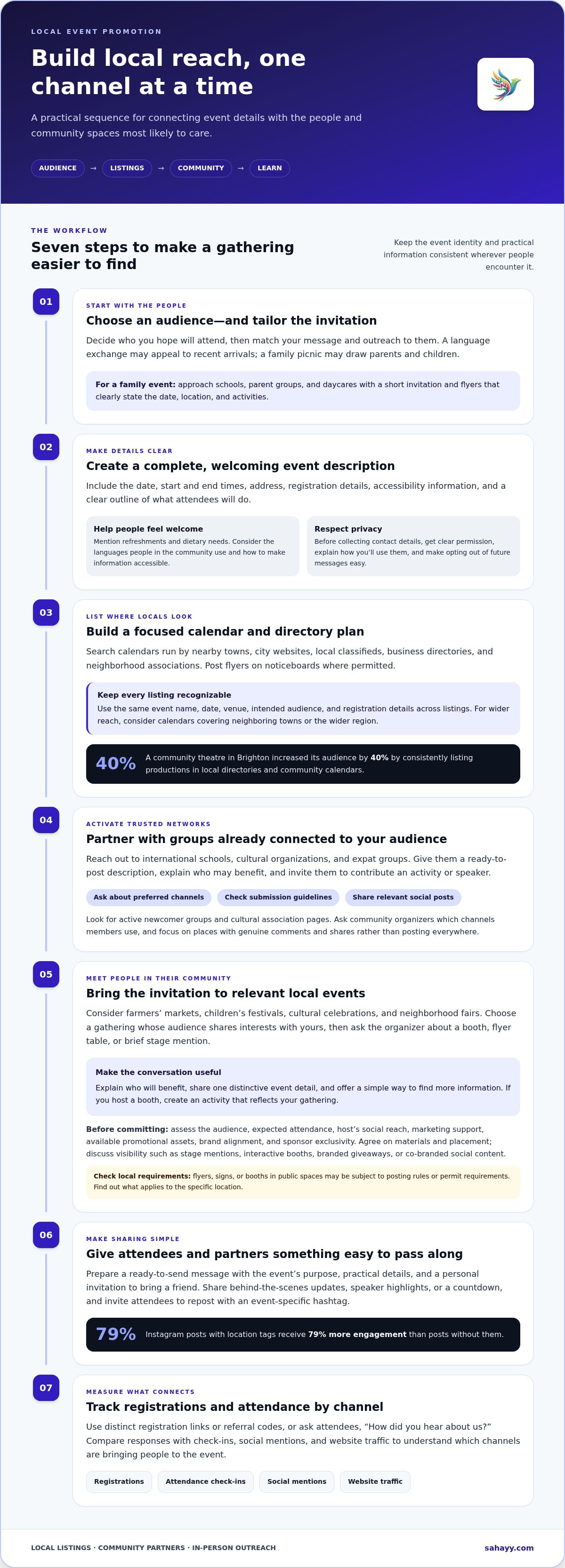
Start by identifying the people you hope will attend. A language exchange may appeal to recent arrivals, while a family picnic may draw parents and children. Match your message and promotion to the audience. For a family event, approach schools, parent groups, and daycares with a short invitation and flyers that clearly state the date, location, and activities.
Make it easy for attendees to share the event. Give them a ready-to-send message with its purpose, practical details, and a personal invitation to bring a friend. You could also offer a clear referral incentive, such as a small discount or exclusive access. Share behind-the-scenes updates, speaker highlights, or a countdown, and invite attendees to repost them with an event-specific hashtag.
Food can help guests feel welcome. Choose refreshments that suit the event, audience, and dietary needs, then mention what to expect in the event description. Location-based promotion can help people nearby discover the gathering, especially when the audience is concentrated around the venue or surrounding neighborhoods.
Privacy requirements vary by country. Get clear permission before collecting contact details, explain how you’ll use them, and make it easy for people to opt out of future messages.
Include the date, start and end times, address, registration details, accessibility information, and a clear outline of what attendees will do. Consider whether people in the community use multiple languages and how to make the event information accessible to them.
Track registrations and attendance by promotion channel. Use distinct registration links or referral codes, or ask “How did you hear about us?” Compare the responses with check-ins, social mentions, and website traffic to understand which channels are bringing people to the event.
2. Online event directories and community calendars
Build a focused listing plan around your venue and audience. Search calendars run by nearby towns, city websites, local classifieds, business directories, and neighborhood associations. Post flyers on noticeboards where permitted. Keep the event name, date, venue, intended audience, and registration details consistent across listings so people can recognize the same gathering wherever they find it.
For wider reach, submit especially appealing events to calendars covering neighboring towns or the wider region. A community theatre in Brighton increased its audience by 40% by consistently listing productions in local directories and community calendars. Online event platforms can also help newcomers discover gatherings while browsing local activities. Share each listing through relevant social media campaigns and track which posts prompt questions or shares.
Which social media platforms do expats in your area use most? Look for active newcomer groups, cultural association pages, and event posts with genuine comments and shares. Ask community organizers which channels their members use, then focus your efforts there instead of posting everywhere.
Partner with international schools, cultural organizations, and expat groups by giving them a clear reason to share your event. Provide a ready-to-post description, explain who may benefit, and invite the organization to contribute an activity or speaker. Ask about its preferred channels and submission guidelines before sending promotional materials.
Street teams can complement online outreach. Invite volunteers to distribute flyers at community centers, cultural festivals, or neighborhood markets, with one simple invitation to share. You can also explore local community connections as part of your event promotion.
3. Promoting at other local events
Meet potential attendees where they already gather. Farmers’ markets, children’s festivals, cultural celebrations, and neighborhood fairs can put your invitation in front of a relevant audience. Choose events that attract people with interests related to yours, then ask the organizers about a booth, flyer table, or brief stage mention. A language exchange, for example, may suit a multicultural festival better than a general business expo.
Make each conversation useful. Explain who will benefit, share one distinctive event detail, and offer a simple way to find more information. If you host a booth, create an activity that reflects your gathering. Agree with the host on materials, placement, and any sponsor exclusivity before the event. Afterward, share a recap on Instagram, tag the location, and invite the host to repost it. Instagram posts with location tags receive 79% more engagement than posts without them.
What local advertising rules or permit requirements apply? They depend on the municipality, venue, and promotion format. Flyers, signs, or booths in public spaces may be subject to local posting rules or permit requirements, so find out what applies to the specific location before distributing materials.
How much should you budget? In-person promotion can also rely on shared materials, volunteer time, and partner support.
Before committing, assess the audience, expected attendance, host’s social reach, marketing support, available promotional assets, brand alignment, and sponsor exclusivity.
Negotiate visibility through stage mentions, interactive booths, branded giveaways, or co-branded social content.
Sahayy: Sahayy Mobile App
Sahayy brings local events and communities together in one mobile app. After promoting your gathering through calendars and in-person outreach, use Event Discovery and Posting to help people living abroad find events and share their own.
People can explore nearby communities, while organizers can post event details where community members look for local connections. Commy, Sahayy’s AI assistant, answers questions in multiple languages based on what is posted in the community. The Marketplace also brings local listings into the same community platform.
Use Sahayy to complement your promotion with event discovery and community connection. Visit sahayy.com to learn more.
Turn a Local Gathering Into a Lasting Connection
One event can be the first step toward feeling at home. As you plan what comes next, think beyond attendance: give people a welcoming reason to meet again and invite others into the community. Local discovery tools can help that connection continue after the gathering ends.
To promote a local expat event and build lasting connections, use Sahayy’s mobile app, Event Discovery and Posting, and Commy AI assistant. These tools bring event sharing and community questions into one place, helping organizers and attendees stay connected around local activities.
Choose a practical next step that makes taking part easier. Your gathering can be the start of new friendships and a stronger sense of belonging.
Every welcoming invitation can help a new place feel more like home.
Frequently Asked Questions
How To Market a Local Event?
To promote a local expat event, make the first experience easy to picture. Describe what guests will do when they arrive, whether they can come alone, and who will welcome them. Ask someone attending for the first time to review the invitation for confusing details. Their feedback may uncover small barriers, such as unclear entry instructions or wording that makes the event feel intimidating.
What are the best ways to promote a local event for expats?
To promote a local expat event, show prospective guests what taking part will feel like, not just what’s on the schedule. Mention whether newcomers can arrive alone, how hosts will help people connect, and what language the gathering will use. A clear welcome plan makes an unfamiliar event easier to picture and helps people decide whether to attend.
What local event listing websites and newsletters accept submissions?
Look for calendars run by municipal offices, libraries, neighborhood associations, cultural groups, and local publications. Find each outlet’s event submission page or newsletter contact, then tailor your description to its audience. A family newsletter needs practical details for parents; a cultural group’s calendar may need context about the event’s community connection.
When should I start promoting an expat event, and how often should I post?
Start promotion 2-3 months before the event, then adjust the rhythm to its scale and audience. Avoid repeating the same announcement: alternate organizer introductions, attendee questions, practical arrival guidance, and timely reminders. As the date approaches, prioritize details that help people make a decision, such as the agenda or how to find the entrance.

Article by
Vinay Patil
Vinay Patil is the founder of Sahayy, a community platform inspired by his own experience of moving to a new country and having to figure out things that someone already there could have answered in minutes. He believes that belonging is built through small acts of helping — sharing an event, answering a question, recommending a service, or simply connecting someone with the right people. With nearly two decades of experience in technology, Vinay is building Sahayy to make it easier for people to find trusted communities and feel at home, wherever they are in the world.
More at https://vinaypatil.com


