

A moving-out sale affects your moving costs, too. Use an expat moving out sale checklist to sort belongings into four choices: sell usable items, ship what you’ll need and value, donate useful things you won’t take, and store only what you expect to use again. For bulky furniture, compare the cost and effort of keeping it with the value of selling or donating it.
It’s easy to focus on what to pack and leave big decisions until departure is close. A clear plan helps you avoid rushed choices and account for selling, shipping, storage, and other moving expenses.
This checklist walks you through what to sell, ship, donate, or store, how to assess bulky items, and which costs to include in your moving budget. It gives you a calmer starting point for deciding what belongs in your next home and what’s better left behind.
Key Takeaways
- Sort belongings by whether they’re worth selling, shipping, donating, or storing before moving plans get rushed.
- Weigh bulky furniture’s usefulness against the space and shipping costs it may add to your move.
- Build your budget around more than transport: account for storage, housing setup, and unexpected expenses.
- Use a clear timeline to make decisions early and leave room to handle the practical details of moving abroad.
Selling or storing bulky furniture
Decide what to do with each large item before arranging international shipping. A sofa that suits your current home may not fit your next one, and bulky items can increase shipping costs. List furniture by room, then mark each piece to sell, store, donate, or ship. Keep a table, for example, only if it fits your destination home and is worth transporting. Compare the likely sale proceeds with the cost and effort of keeping it.
For furniture you’ll store, choose a climate-controlled facility for delicate items. Wood, fabric, and photographs can be vulnerable to changing conditions. Keep an inventory with photos, condition notes, and the storage location, so you can find specific belongings later. Arrange housing, shipping, and storage around 3-4 months ahead of departure. This gives you time to sort items without leaving everything until travel week.
Build tax and account tasks into the same move plan. According to the Internal Revenue Service, for the 2025 U.S. tax year, the Foreign Earned Income Exclusion can exclude up to $130,000 of foreign earned income. To qualify under its Physical Presence Test, a taxpayer must spend 330 full days outside the United States during a 12-month period, according to the Internal Revenue Service. U.S. taxpayers generally must file an FBAR if foreign financial accounts exceed $10,000 at any point during the year, according to the Financial Crimes Enforcement Network. These obligations can affect your wider moving budget, separate from furniture decisions.
As you settle into a new residence, local connections can help you understand the neighborhood and make daily life feel more familiar. A support network abroad can also help you feel connected as you arrive and establish a home. Keep sale proceeds and storage expenses in your moving budget, noting the currency used for each transaction.
Selling, donating, shipping, or storing belongings
Create an inventory for every room and assign each item a next step. Sell usable furniture, donate items that could help someone locally, ship belongings you’ll need overseas, and store items worth keeping but unsuitable for your next home. Add photos and condition notes to your records so you can track each item’s sale, donation, or storage plan.
Garage and yard sale permits and restrictions depend on your city. Check official city guidance before choosing a date, location, or signs. Tax treatment for household sales depends on the items and circumstances, while customs rules apply to goods entering another country. Keep sale records and consult a tax professional about your situation. Research destination-country customs rules for belongings you plan to ship.
Price each item based on its condition, usefulness, and visible features. Clean it, photograph any wear, and set a clear asking price. Group low-value kitchen items together if that makes them easier to browse.
Advertise locally and online with the sale date, general location, item list, and photos. Describe items accurately, and remove listings promptly when they sell.
Organize the sale by category, label prices, and keep sold, donated, shipped, and stored belongings separate. Set aside documents, copies, and personal items before buyers arrive. Track sale income separately from moving expenses, and update your bank account records as needed for life abroad.
Display payment options and agree on the amount before handing over an item. Keep valuables and personal documents out of sight, arrange for someone else to be present, and meet buyers in a visible area when practical.
Budgeting and unexpected moving expenses
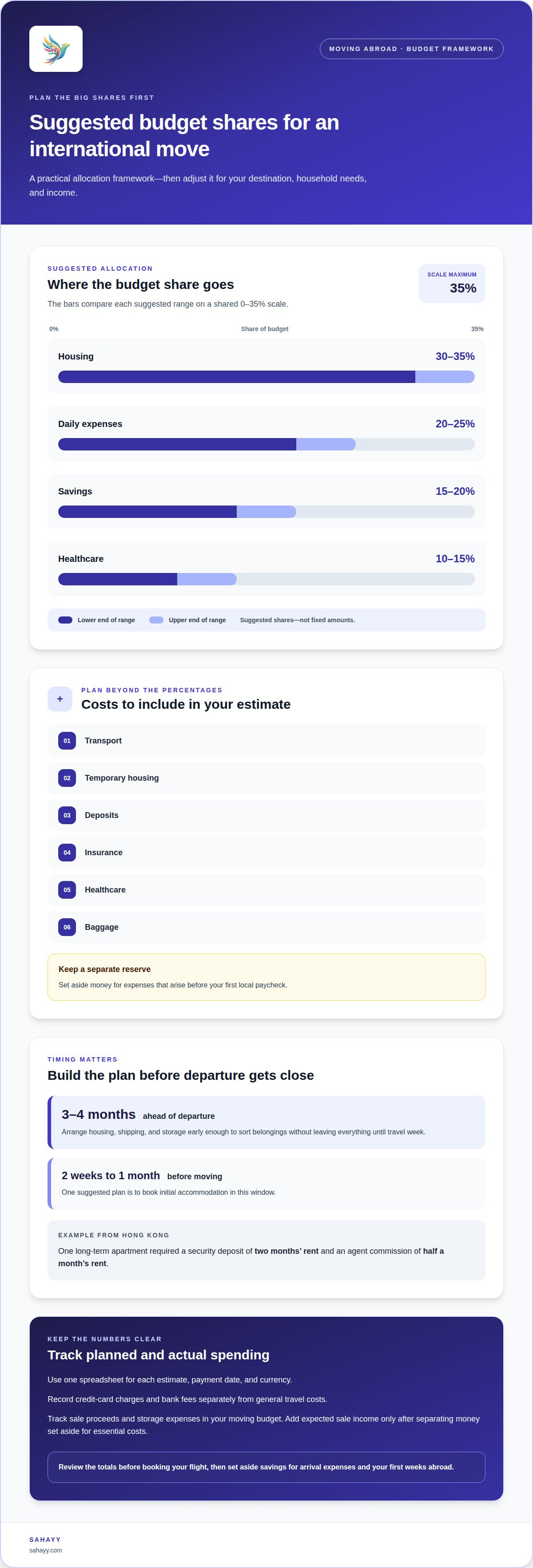
Start planning your moving-out sale alongside other move preparations, not during departure week. Arrange housing, shipping, and storage around 3-4 months ahead of departure. That gives you time to decide what sale proceeds can contribute toward travel, relocation, or living expenses. Add expected income from sold belongings to your budget only after separating it from money already set aside for essential costs.
Build your moving abroad checklist around actual expense categories: transport, temporary housing, deposits, insurance, healthcare, and baggage. One suggested budget allocation sets aside 30-35% for housing, 20-25% for daily expenses, 15-20% for savings, and 10-15% for healthcare. Treat these percentages as a planning framework, then adjust for destination, household needs, and income. Keep a separate reserve for expenses that arise before your first local paycheck.
Housing costs can come due before you settle in. In one Hong Kong example, a long-term apartment required two months’ rent as a security deposit and half a month’s rent as an agent commission. Budget separately for initial accommodation, too. One suggested plan is to book two weeks to one month before moving.
Track each estimate, payment date, and currency in one spreadsheet, with columns for planned and actual spending. Record credit-card charges and bank fees separately so they don’t disappear into general travel costs. Review the totals before booking your flight, then set aside savings for arrival expenses and your first weeks abroad. A clear budget makes the sale part of a larger moving plan.
Sahayy
As you prepare to move and settle abroad, Sahayy helps you connect with local community. Use the Sahayy Mobile App to find nearby groups, events, and community marketplace listings. Event Discovery and Posting lets you find or share local gatherings, while Commy, Sahayy’s AI assistant, answers queries in multiple languages using information posted in your community. These tools can help you get to know a new place, alongside your plans for shipping, storage, and budgeting.
As you settle in, community connections can make it easier to discover local resources and feel at home. Contact Sahayy to learn more.
Make room for your next chapter
Your expat moving out sale checklist can track more than what leaves your home. Use it to plan a thoughtful transition and make room for the routines and relationships you want to build in your new country. A move is also a chance to decide what “settled” means to you.
Once the practical decisions are underway, take time to explore your new surroundings at your own pace. Familiar faces, local activities, and welcoming places can help a new neighborhood start to feel like yours. Small connections can make a big change feel more personal.
Take the next step toward finding community as you prepare for life abroad. Explore Sahayy to discover local groups, events, services, and marketplace listings.
One thoughtful step at a time, you’re making room for a fresh start.
Frequently Asked Questions
What To Do with Your Home?
Decide whether to sell, keep, or rent your home based on your plans, ongoing expenses, and whether you expect to return. If you rent, give your landlord the notice required by your lease; 30 days is one example, not a universal rule. If you own, consider how the property will be maintained while you live abroad and who can access it if needed.
What To Do with Your Car?
Decide whether to sell, keep, or take your car by considering how you’ll use it after relocating and what responsibilities will continue while you’re away. Before departure, gather the ownership and loan paperwork, note insurance and parking arrangements, and remove personal belongings. If you keep the car, decide who can access it and handle practical needs during your absence.
To Ship or to Store Your Stuff?
Ship belongings you expect to use soon after arrival, especially items that would be difficult to replace or meaningful to your household. Store things you may want when you return but don’t need in your first home abroad. For example, ship everyday cookware and store seasonal decorations. An expat moving out sale checklist can help you decide which belongings are worth shipping.
What Documents Should I Take With Me?
Keep essential identification and documents in your carry-on, with physical and digital copies of vital, financial, tax, medical, professional, and legal records. A practical checklist can include your passport, prescriptions, medical information, and employment paperwork. Make 4-5 copies of essential moving documents, and keep the originals separate from the copies so one misplaced folder doesn’t leave you without records.
What items should expats sell before moving abroad?
Prioritize bulky furniture, duplicate household goods, and belongings unlikely to suit your next home. A large dining table may not work in a smaller residence, while an extra set of dishes may be easier to sell than store. Use an expat moving out sale checklist to sort useful items for sale, donation, shipping, or storage, and keep only what merits the space.

Article by
Vinay Patil
Vinay Patil is the founder of Sahayy, a community platform inspired by his own experience of moving to a new country and having to figure out things that someone already there could have answered in minutes. He believes that belonging is built through small acts of helping — sharing an event, answering a question, recommending a service, or simply connecting someone with the right people. With nearly two decades of experience in technology, Vinay is building Sahayy to make it easier for people to find trusted communities and feel at home, wherever they are in the world.
More at https://vinaypatil.com


