

What if missing home doesn’t mean you made the wrong move? When familiar people, food, language, and routines are suddenly far away, even ordinary days can feel lonely. If you’re searching for how to cope with homesickness 2026, start by remembering that feeling unsettled is a human response to change, not a verdict on your decision to move.
You don’t have to choose between staying close to home and building a life where you are. This guide shares practical ways to bring familiar comforts into your routine while forming new connections at your own pace. You’ll find ideas for staying in touch without feeling stuck, discovering sources of belonging nearby, and recognizing when extra support could help. Start with one manageable step.
Key Takeaways
- Homesickness is distress linked to separation from familiar people, places, and routines; it doesn’t mean your move was a mistake.
- Learn how to cope with homesickness 2026 by naming what you’re feeling, choosing one grounding action, and reaching out in a manageable way.
- Build comforting rituals and a sustainable rhythm for keeping in touch, so connection with home feels supportive rather than overwhelming.
- Explore a local group, event, or familiar-language community at your own pace, adding new connections without letting go of relationships back home.
Why homesickness can feel difficult when you live abroad
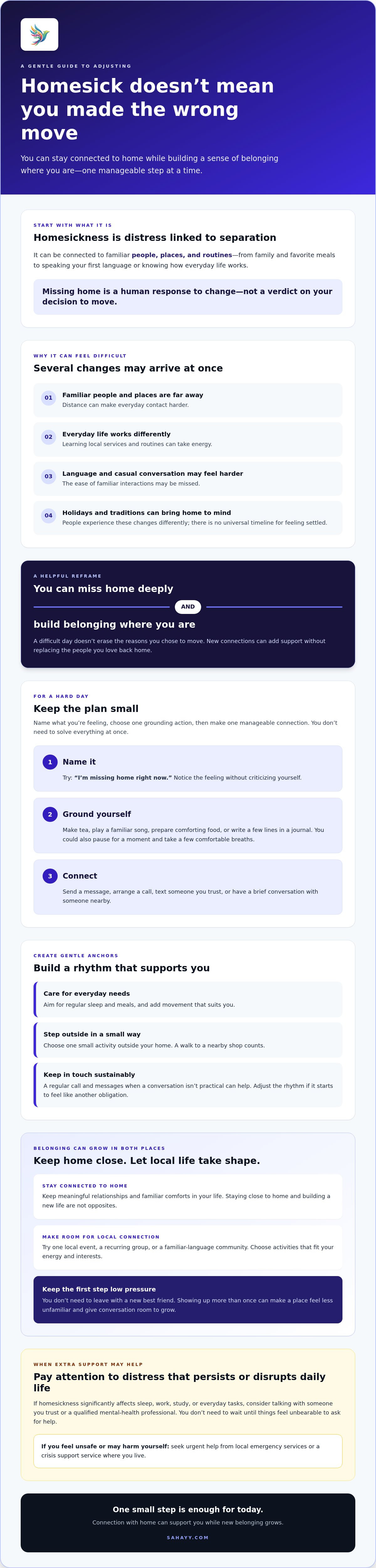
Homesickness is distress connected to being separated from familiar people, places, and routines. You might miss family, a favorite meal, the ease of speaking your first language, or simply knowing how everyday life works. This psychological definition of homesickness helps explain why the feeling can involve more than missing a particular person or place.
Life abroad can bring several changes at once. You may be learning how local services work, navigating language barriers, or missing the casual conversations that once came easily. Distance can make everyday contact harder, while holidays and familiar traditions may bring home to mind more strongly. These experiences affect people differently. A difficult day doesn’t erase the reasons you chose to move.
Is homesickness a normal part of adjusting to life abroad?
Missing home can be part of adjusting, but there’s no universal timeline for feeling settled. Your experience may depend on your circumstances, support, and what has changed. Occasional longing is different from distress that persists and disrupts sleep, work, study, or everyday tasks. If that’s happening, consider talking with someone you trust or seeking professional support.
You can miss home deeply and still build a sense of belonging where you are, one connection at a time. If you’re wondering how to cope with homesickness 2026, start by noticing what feels hardest instead of judging yourself for feeling it. A support network abroad can give you people to talk with as you adjust, while you keep meaningful ties back home.
How to cope with homesickness: small steps for hard days
On a difficult day, keep the plan small: name what you’re feeling, choose one grounding action, then make one manageable connection. You don’t need to solve everything at once. This sequence can help you focus on what might feel supportive right now.
- Name it: Try, “I’m missing home right now,” without criticizing yourself.
- Ground yourself: Make tea, play a familiar song, prepare a comforting food, or write a few lines in a journal.
- Connect: Send a message, arrange a call, or have a brief conversation with someone nearby.
What can you do when homesickness hits suddenly?
Pause for a moment. Notice the emotion and take a few comfortable breaths, then choose one simple next step, such as stepping outside or texting someone you trust. A call with loved ones may help, but it doesn’t have to be your only source of comfort. The University of California, Berkeley also shares practical ideas for coping with homesickness.
For steadier days, create gentle anchors rather than a strict schedule. Aim for regular sleep and meals, add movement that suits you, and choose one small activity outside your home. A walk to a nearby shop counts. Set a sustainable rhythm for contacting people back home, too. For example, you could plan a regular call and use messages when a conversation isn’t practical. Adjust the routine if it starts to feel like another obligation.
If you’re learning how to cope with homesickness 2026, remember that routines and relationships can support each other. For ideas on building a support network abroad, explore ways to meet people at your own pace. You could also explore local events and groups with Sahayy as one option for finding people with shared interests.
Build a sense of belonging abroad without leaving home behind
Local connection doesn’t replace the people you love back home. It adds another layer of support: a familiar face at a recurring activity, a neighbor to ask a small question, or a group that shares an interest or language. You can stay close to home while letting your new life take shape, too.
Keep the first step low pressure. Try one local event, attend a group that meets regularly, or look for a familiar language community. You don’t need to leave with a new best friend. Showing up more than once can make a place feel less unfamiliar and give conversation room to grow. Culture shock can also make everyday interactions feel tiring, so choose activities that fit your energy and interests.
If you’re considering how to cope with homesickness 2026, Sahayy is one optional way to discover local groups and events for people living abroad. Explore Sahayy to see whether a shared interest activity could be a comfortable first step. A community resource can help you find opportunities to connect, but it isn’t a treatment for persistent distress.
When should you seek extra support for homesickness?
If distress continues or significantly affects daily life, consider speaking with a qualified mental-health professional. You don’t need to wait until things feel unbearable to ask for help. If you feel unsafe or may harm yourself, seek urgent help from local emergency services or a crisis support service where you live.
For related reading, explore finding an expat community app. Learning about culture shock may also help you make sense of why settling in can feel complicated.
Take one small step toward feeling more at home
Homesickness can be part of life abroad, and it doesn’t mean your move was a mistake. When you’re thinking about how to cope with homesickness 2026, begin with one kind response to yourself: name what you’re feeling, choose a comforting action, then connect with someone you trust. Over time, simple routines and low pressure local activities can help you feel more grounded without letting go of the people and traditions you miss.
If meeting people nearby feels like a useful next step, Sahayy brings local events, groups, services, and a marketplace together in one app. Its core features are free, with a focus on privacy, safety, and inclusion. It’s a practical way to explore local connections, not a replacement for personal or professional support.
Go at your own pace. Small points of connection can grow into a greater sense of belonging, one day at a time.
Frequently Asked Questions
Is homesickness normal when you move to another country?
Yes, missing familiar people, places, and routines can be part of relocating to another country. Each person’s experience is different, and there’s no single timeline for adjusting. Homesickness doesn’t prove you made the wrong choice. If the distress persists or makes everyday life difficult, consider talking with someone you trust or seeking support from a qualified professional.
How do you cope with homesickness when it hits suddenly?
Start by naming the feeling without judging yourself, then take a comfortable pause to breathe and notice your surroundings. For how to cope with homesickness 2026, choose one simple next step: message someone you trust, make a familiar meal, or take a short walk. Small actions can help you through the moment, even if the feeling doesn’t disappear right away.
Can keeping in touch with family make homesickness worse?
Staying in touch can be comforting, though the effect varies from person to person. Rather than automatically cutting back, try agreeing on a realistic contact routine that works for everyone, such as a planned call or occasional voice messages. Notice how you feel afterward and whether the routine leaves room for daily life where you are. Adjust it to suit your relationships and circumstances.
When should I get professional help for homesickness?
Consider speaking with a qualified mental-health professional if homesickness persists, intensifies, or makes everyday responsibilities difficult. Asking for help doesn’t mean you’ve failed to adjust; it’s a supportive step. If you feel unsafe or at risk of harming yourself, contact local emergency services or a crisis support service promptly. Choose the urgent support available where you live.

Article by
Vinay Patil
Vinay Patil is the founder of Sahayy, a community platform inspired by his own experience of moving to a new country and having to figure out things that someone already there could have answered in minutes. He believes that belonging is built through small acts of helping — sharing an event, answering a question, recommending a service, or simply connecting someone with the right people. With nearly two decades of experience in technology, Vinay is building Sahayy to make it easier for people to find trusted communities and feel at home, wherever they are in the world.
More at https://vinaypatil.com


