

What if finding your people nearby didn’t mean joining five separate chats, switching between languages, and guessing which recommendations to trust? An immigrant networking platform can make local connection easier, but only when it brings useful community discovery together with clear, respectful ways to participate.
If you’ve struggled to find relevant events, groups, or practical guidance across scattered channels, you’re not alone. Language barriers and uncertainty about who or what to trust can make reaching out feel like another task. This guide explains how immigrant networking platforms are evolving in 2026 and what makes them useful, trusted spaces. We’ll look at shifts toward multilingual support, local discovery, and connected community features, then share what to look for and how to explore connections while keeping personal boundaries in view.
Key Takeaways
- See why an immigrant networking platform is evolving from a standalone social group into a place to discover local community connections and practical information.
- Look for multilingual access, location-aware discovery, and ways to connect online and in person when choosing where to participate.
- Assess trust for yourself by checking information, considering privacy choices, and evaluating recommendations rather than assuming a platform guarantees safety.
- Explore how connected local resources and transparent sponsored visibility could help platforms grow while keeping community needs in focus.
Why immigrant networking platforms are evolving beyond online groups
An immigrant networking platform is a digital space where people living abroad can discover connections and local community resources. The need is practical: after a move, useful information and familiar connections may be scattered across group chats, event pages, and personal recommendations. A platform that brings discovery and communication together can make those pieces easier to explore in one place.
That shift reflects how community ties work. As social network theory describes, connections can help people reach information and opportunities. For someone settling in a new place, a local group might lead to an event, while a neighbor’s recommendation may point toward a useful service. The value lies not only in meeting people, but in finding relevant connections close to home.
What makes immigrant networking different from general social networking?
Relocation can make language, location, and cultural familiarity especially important. A broad social feed may connect people, but it may not make it easy to find a nearby gathering or ask a question in a comfortable language. Useful discovery can bring together events, groups, services, and peer-to-peer exchange, while letting people choose what feels relevant to them.
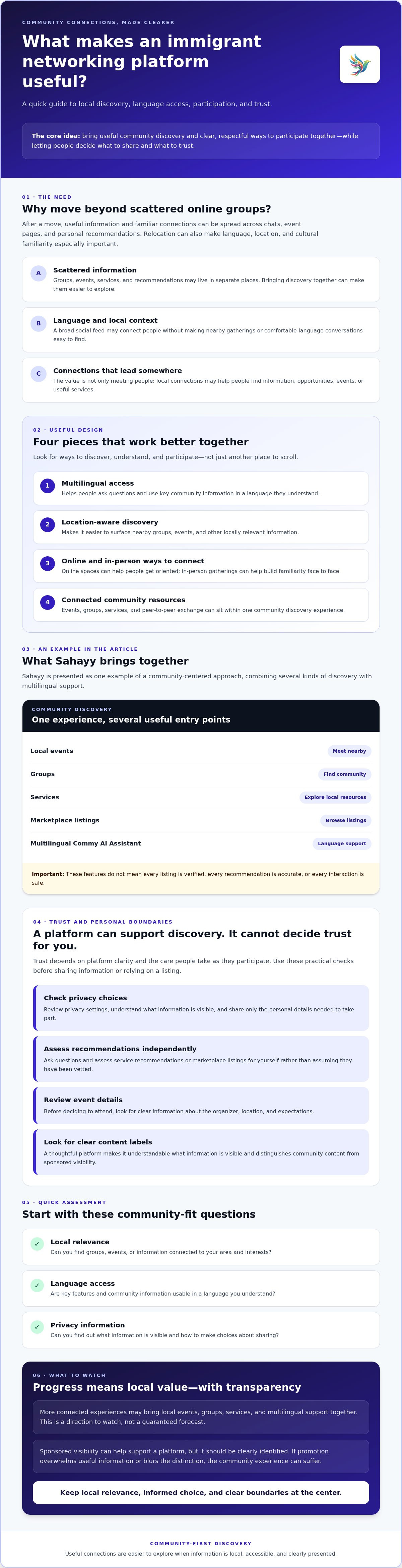
For example, Sahayy brings local events, groups, services, and marketplace listings together, with a multilingual Commy AI Assistant. These features illustrate a community-centered approach, not a promise that every listing or interaction is verified. Needs like accessible language and local discovery are established design considerations; claims about market growth or what platforms will become should be supported by current evidence, not assumed. For broader practical advice, explore this networking guide for people living abroad.
Which trends make immigrant networking platforms more useful and trustworthy?
Useful design brings language access, local discovery, and different ways to connect into one experience. Multilingual support can make it easier to ask questions; location-aware discovery can help surface nearby groups and events. Online spaces and in-person gatherings serve different needs, from getting oriented before attending to building familiarity face to face.
Sahayy offers one example of this connected approach, bringing events, groups, services, and marketplace listings together with a multilingual Commy AI Assistant. These features can help people explore community information in one place, but they don’t guarantee that every listing is accurate or every interaction is safe. Trust depends on both a platform’s clarity and the care people take as they participate.
How can platforms balance local discovery with privacy and trust?
Start with a few simple checks. Review the platform’s privacy settings and share only the personal details needed to take part. Before relying on a service recommendation or marketplace listing, assess it independently and ask questions; don’t assume it has been vetted. For events, look for clear details about the organizer, location, and expectations before deciding whether to attend.
A thoughtful immigrant networking platform should make it easy to understand what information is visible and distinguish community content from sponsored visibility. For more ways to assess your options, read this guide to choosing an expat community app. You can also explore how Sahayy brings community discovery together, then decide what feels right for you.
What the next phase of immigrant networking means for communities and platforms
The next phase may bring local events, groups, services, and multilingual support into more connected experiences. That’s a direction to watch, not a guaranteed forecast. The measure of progress should be whether people can find relevant community information more easily while still choosing what to share and how to participate.
Platforms also need sustainable ways to support their work. Sponsored visibility can play a role, but it should be clearly identified so people can distinguish paid promotion from ordinary community content. If advertising overwhelms useful information or blurs that distinction, it can weaken the experience people came for. A community-first approach keeps local value at the center.
How can readers assess whether a platform serves its community well?
Use this quick checklist when exploring an immigrant networking platform:
- Local relevance: Can you find groups, events, or information connected to your area and interests?
- Language access: Are key features and community information usable in a language you understand?
- Privacy information: Can you find out what information is visible and review your choices?
- Clear listings: Are event, service, and marketplace details understandable, with sponsored content clearly marked?
Sahayy is one example to explore. Its core features are free, and the app brings community discovery together with a multilingual assistant. To begin, identify one local need, browse a relevant group or event, and review the platform’s privacy information before sharing personal details. Take it at your own pace. Explore Sahayy’s community connection platform.
Take the Next Step Toward Local Connection
A useful immigrant networking platform does more than bring people together online. It helps make local events, groups, and community information easier to discover, while offering language access and clear choices about what you share. Trust still takes care: review privacy settings and assess recommendations for yourself.
Sahayy brings local events, groups, services, and a community marketplace together, alongside a multilingual AI assistant that supports queries in multiple languages. These features offer one place to begin exploring what may be relevant to you.
Start with one small step, such as exploring a nearby event or group. A familiar connection can grow over time, at a pace that feels right for you.
Frequently Asked Questions
What is an immigrant networking platform?
An immigrant networking platform is a digital service that helps people living abroad find community connections and locally relevant information. Depending on the service, it may bring together groups, events, local services, or peer listings. Before joining, check which features are available where you live, read the privacy information, and decide what personal details you’re comfortable sharing.
How can an immigrant networking platform help newcomers?
It can help newcomers discover local groups, events, and community resources in one place. Some platforms also offer multiple language options or peer-to-peer listings. How useful they are depends on local activity and the relevance of the information. Treat recommendations as a starting point, then assess people, providers, and details independently before acting on them.
Are immigrant networking platforms safe to use?
No platform can guarantee that every interaction or listing is safe. Read its privacy information, share only details you’re comfortable making visible, and use care when meeting someone or contacting a provider. Check recommendations and listing details independently. If something concerns you, look for the platform’s available reporting options, and verify which safety or moderation tools it actually provides.
What should I look for in an immigrant networking platform?
Look for local groups and events that match your needs, accessible language options, clear privacy information, and understandable listing descriptions. Check whether sponsored content is clearly identified and whether you can participate without sharing unnecessary personal information. Features and local activity vary, so review the current offering in your area before relying on a platform for community information.

Article by
Vinay Patil
Vinay Patil is the founder of Sahayy, a community platform inspired by his own experience of moving to a new country and having to figure out things that someone already there could have answered in minutes. He believes that belonging is built through small acts of helping — sharing an event, answering a question, recommending a service, or simply connecting someone with the right people. With nearly two decades of experience in technology, Vinay is building Sahayy to make it easier for people to find trusted communities and feel at home, wherever they are in the world.
More at https://vinaypatil.com


