

A mentor can help you understand workplace norms and build connections beyond your immediate circle. Finding a mentor as an immigrant professional is one practical way to gain that guidance, especially when familiar networks and work cultures have changed. It’s understandable if reaching out feels uncertain or you’re unsure how to keep the relationship useful over time.
Mentorship can strengthen professional connections and help you access useful resources, but it also takes realistic expectations about busy schedules and communication. Learn how to approach a potential mentor, agree on the support you’re looking for, and build a relationship that respects cultural differences and personal boundaries. The goal isn’t to find someone with every answer. It’s to create a supportive connection where experience, questions, and trust can grow.
Key Takeaways
- Look for structured mentoring matches as well as informal connections that can open doors to useful professional resources.
- Set clear expectations early, and consider a potential mentor’s time before building a regular meeting routine.
- Build trust by discussing communication preferences, listening with care, and making room for different cultural experiences.
- Explore local events and community groups to find more opportunities for connection and support.
Social capital and connections to resources
Professional mentors can share workplace insight and introduce newcomers to networks they may not know yet. These connections can make career information and useful resources easier to access.
Finding Mentors in the United States
In the United States, immigrant professionals can search online for newcomer mentoring programs or contact a local settlement agency. Some programs match job-ready mentees with volunteer mentors who share a similar background. For finding a mentor as an immigrant professional, these structured routes offer a focused starting point. Mentors may explain workplace expectations, suggest professional contacts, or point to resources related to a career goal. Shared knowledge and introductions can help build social capital and expand access to professional networks.
For example, a mentor’s introduction to a professional group can help you learn which events and conversations matter in your field. Treat each introduction as an opportunity to build a genuine connection, not simply collect contacts.
Industry Mentors and Outreach
Industry mentors have experience related to your occupation, career direction, or transition into the local workforce. Search for newcomer programs and professional communities in your field, then look for people familiar with your questions. Finding a mentor as an immigrant professional can also mean seeking someone who understands credential evaluation, licensing, or work authorization experiences. Ask about their perspective and useful resources, rather than treating a mentor as a legal or licensing authority.
Make your first request specific and respectful. Briefly introduce your background, name one career goal, and explain why their experience is relevant. A toolkit’s sample outreach email asks for a 15-30 minute conversation. For instance, ask how they built local industry connections after arriving in the United States. A clear, time-limited request helps the person understand what you’re seeking and whether they can help.
Barriers to ongoing mentorship
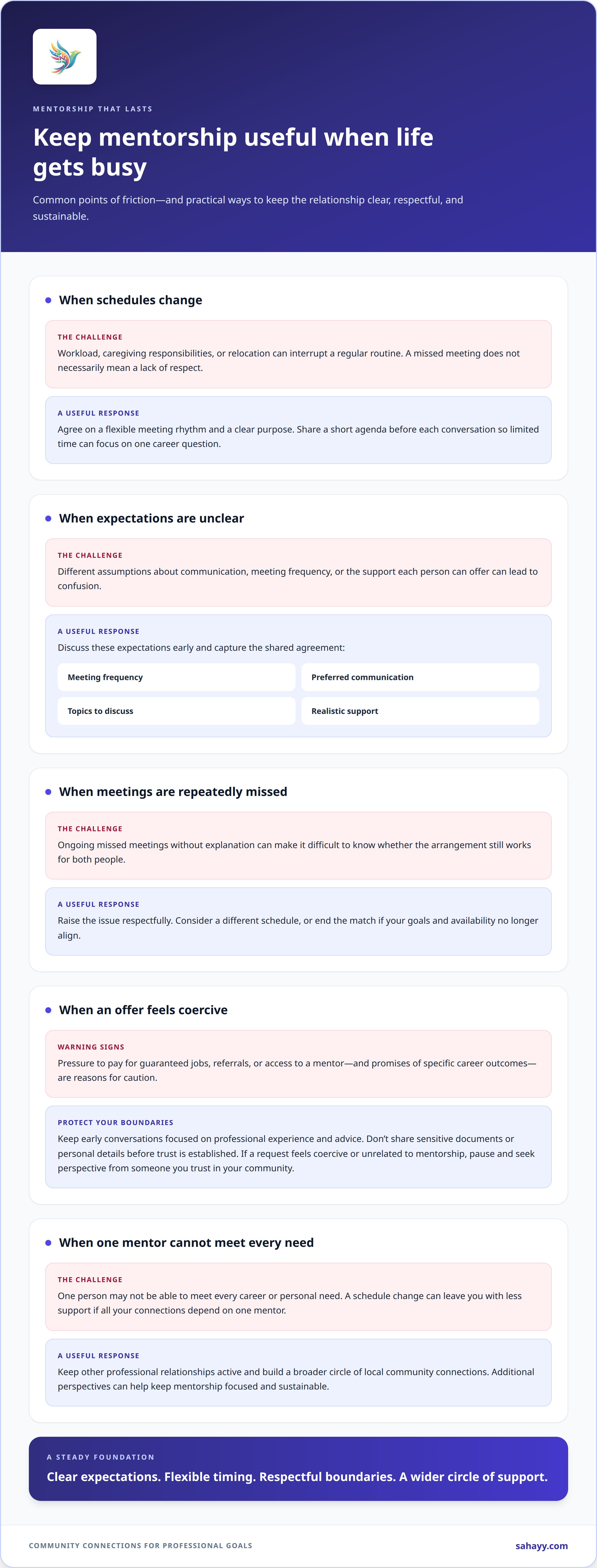
Mentoring can lose momentum when a professional’s workload, caregiving responsibilities, or relocation demands change. Professionals may also struggle to make time for mentoring, so a missed meeting doesn’t necessarily signal a lack of respect. A mentor managing a busy project, for instance, may need to reschedule. Agree on a flexible meeting rhythm and a clear purpose so you can both assess whether the relationship remains useful. Share a short agenda before each conversation to focus limited time on one career question.
Scam risks include pressure to pay for guaranteed jobs, referrals, or access to a mentor. Treat promises of specific career outcomes as a warning sign, and don’t share sensitive documents or personal details before trust is established. Keep early conversations focused on professional experience and advice. If a request feels coercive or unrelated to mentorship, pause the exchange and seek perspective from someone you trust in your community.
Clear expectations can prevent confusion. Agree on meeting frequency, preferred communication, discussion topics, and what each person can realistically offer. A simple commitment agreement can capture those shared expectations. Your time matters too: if a mentor repeatedly misses agreed meetings without explanation, raise the issue respectfully and decide whether the arrangement still works. You could suggest a different schedule or end the match if your goals and availability no longer align.
One mentor can’t meet every career or personal need. Keep other professional relationships active, so a schedule change doesn’t leave you without support. A broader circle of local community connections can help you find additional perspectives while keeping mentorship focused and sustainable.
Culturally sensitive mentoring practice
A culturally sensitive mentor listens without treating one person’s experience as representative of an entire community. This makes it easier for immigrant professionals to discuss career goals and cultural differences respectfully.
Choosing a Culturally Sensitive Mentor
Choose a mentor who respects your perspective, listens carefully, and adapts guidance to your goals. A shared background may help create understanding, but it doesn’t guarantee a good fit. Notice how the person responds when you describe a workplace experience they haven’t encountered. For example, a mentor who asks what support you want before offering advice makes room for your priorities.
In an early conversation, discuss how you prefer to communicate, which topics you’re comfortable exploring, and what you hope to learn. Close, informal, personalized conversations can help build trust, especially when discussing personal challenges. You might describe one workplace situation and see whether the mentor responds with curiosity rather than assumptions.
Workplace Culture and Career Advancement
A useful mentor can help interpret workplace expectations while recognizing that experiences vary. Ask, “How are decisions usually shared on your team?” or “What does constructive feedback look like here?” These questions invite specific examples instead of broad claims about all U.S. workplaces. To understand advancement, ask how employees can demonstrate readiness for more responsibility and how managers typically communicate growth opportunities.
Use a real situation to make the conversation practical. For example, describe a meeting where you weren’t sure when to contribute, then ask how your mentor might approach it. You can also ask what their workplace values during promotion discussions. Listening to their experience and comparing it with your own goals can help you choose next steps without treating one person’s advice as universal.
Sahayy
Sahayy can help you build local connections around your professional goals. Its mobile app brings nearby communities, events, groups, and a marketplace together, giving you more ways to meet people and discover shared interests. You can explore event listings, take part in community conversations, or use Commy AI Assistant for queries in multiple languages. These connections may help you find people to learn from, while mentorship itself grows through mutual trust and clear expectations.
Turn to Sahayy when you want to widen your circle beyond one mentor or make community participation part of your career journey in Berlin. Explore local events and groups at your own pace, and start with conversations that feel relevant to your goals.
Build your next connection with intention
Make your next step small and specific: identify one career question you want to explore, then look for a conversation that could help you think it through. Finding a mentor as an immigrant professional can begin with a shared interest or a thoughtful exchange, rather than an immediate request for an ongoing commitment. As trust develops, you can decide together what kind of guidance feels useful and respectful. For instance, ask how someone approached a career transition, then consider which parts of their experience fit your priorities.
Keep your goals in view while staying open to unexpected connections. A supportive professional relationship can grow at its own pace, shaped by honest questions and mutual care. You deserve space to bring your experience and ambitions into the conversation.
Your next meaningful connection can start with one conversation.
Frequently Asked Questions
What nonprofit organizations offer free mentoring for immigrants and refugees?
Newcomer-serving nonprofits and refugee resettlement organizations are useful places to ask about volunteer mentoring. Some professional mentoring programs match job-ready newcomers with volunteer mentors. Availability and eligibility depend on the local program. When searching, use your profession and city alongside terms such as “immigrant professional mentoring” or “refugee employment mentorship” to find relevant organizations.
Are there mentorship programs for immigrants through universities, employers, or professional associations?
Universities, employers, and professional associations can also be routes to mentorship, though programs differ. A university career center may connect alumni with graduates, while an employer may offer internal mentoring or employee groups. Professional associations can help you meet people in a specific field. Ask about eligibility, matching criteria, and whether the program supports newcomers’ career transitions.
Are there online mentoring platforms for immigrant professionals in the U.S.?
Online options include structured newcomer mentoring programs and professional communities that connect people across locations. Virtual meetings can make participation easier when local options are limited. Before joining, review the program’s purpose, mentor selection process, and communication format. A focused program for your profession or career stage may be more relevant than a general networking space.
How much do professional mentorship programs cost, and which ones are free?
Costs vary by program. Some nonprofit or volunteer-based mentoring programs are free to participants, while other services may charge for structured coaching or additional support. The fee can depend on the format and level of guidance. Before enrolling, look for clear information about what participation includes, and consider employer, university, or community programs as possible no-cost routes.
Are there local mentoring resources for immigrants in major U.S. cities?
Local immigrant-serving organizations and professional communities can help you find mentoring options in major U.S. cities. Start with organizations supporting newcomers in your area, then narrow your search by profession, career goal, or language preference. Local programs may understand the regional job market and community resources, while online matching can extend your options beyond nearby networks.

Article by
Vinay Patil
Vinay Patil is the founder of Sahayy, a community platform inspired by his own experience of moving to a new country and having to figure out things that someone already there could have answered in minutes. He believes that belonging is built through small acts of helping — sharing an event, answering a question, recommending a service, or simply connecting someone with the right people. With nearly two decades of experience in technology, Vinay is building Sahayy to make it easier for people to find trusted communities and feel at home, wherever they are in the world.
More at https://vinaypatil.com


