

A furniture shop doesn’t need one platform for every piece. Local classifieds, community boards, and digital yardsales can work well for floor samples, overstock, clearance frames, and other furniture buyers can inspect and pick up locally. To decide where to sell furniture online, match each piece with its likely audience and the selling process you prefer.
Getting a listing live is only part of the job. Buyers need clear details and honest photos to judge a piece, especially if it’s distinctive, vintage, or handcrafted. This guide covers how to choose a suitable platform, create a trustworthy listing, and reach buyers who value what makes your furniture stand out.
Key Takeaways
- Match each piece to the platform and buyer most likely to value it, including local channels for furniture buyers can inspect and pick up.
- Build buyer confidence with clear photos and an honest description of the piece’s condition, dimensions, materials, and history.
- Help distinctive furniture stand out by highlighting the details that make each item designer, vintage, or handcrafted.
- Use Sahayy’s Community Marketplace to connect with people in local communities who may be looking for furniture.
Which platform is best for selling furniture online?
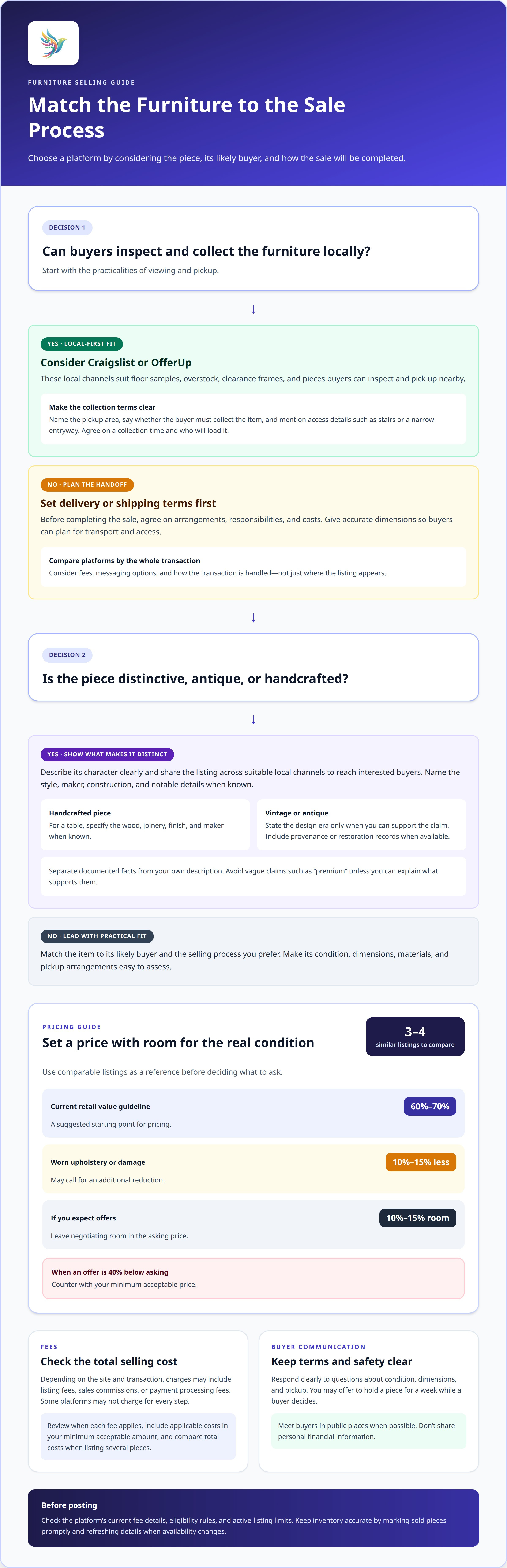
Choose a platform based on the furniture, its likely buyer, and how the sale will be completed. Fees, messaging options, and pickup arrangements also matter.
Choosing a Platform by Furniture Type and Buyer
Craigslist and OfferUp suit floor samples, overstock, clearance frames, and pieces buyers can inspect locally. For distinctive antique or handcrafted furniture, describe its character clearly and share listings across suitable local channels to reach interested buyers. Compare three or four similar listings before pricing. A guideline is 60% to 70% of current retail value; worn upholstery or damage may call for another 10% to 15% reduction.
Buyer Communication and Transaction Safety
Respond clearly to questions about condition, dimensions, and pickup. Set an asking price that leaves 10% to 15% negotiating room if you expect offers. If a buyer offers 40% below asking, counter with your minimum acceptable price. You may offer to hold a piece for a week while someone decides. Meet buyers in public places when possible, and don’t share personal financial information.
Fees for Listing and Selling
Platform fees depend on the site and how the transaction is handled. Some charge listing fees, sales commissions, or payment processing fees, while others may not charge for every step. Before posting, review the current fee details and when each charge applies. Factor any applicable costs into the minimum amount you’re willing to accept. If your shop is listing several pieces, compare the total selling costs rather than focusing only on the posting fee.
Pickup, Delivery, and Shipping
Local listings often let buyers inspect and collect furniture themselves. Say whether pickup is required, then agree on a collection time and who will load the item. Give accurate dimensions so buyers can plan for transport and access. If delivery or shipping is involved, agree on the arrangements, responsibilities, and costs before completing the sale. Large or delicate pieces may be easier to sell locally, where buyers can examine them in person.
Listing photos, descriptions, and curation
Pair clear photos with specific details so buyers can assess a piece before arranging pickup or delivery.
Listing Photos and Descriptions
Photograph the piece from several angles, including the front, sides, and back. Add close-ups of scratches, dents, repairs, worn upholstery, and distinctive details. Natural light and an uncluttered background make it easier to see the furniture clearly.
Build the description around facts: dimensions, materials, brand, age, condition, and relevant history. For example, identify a solid-wood antique table, mention a repaired leg, and provide its measurements. Accurate details help buyers judge whether it will suit their space and expectations.
Furniture in Local Listings
For a Craigslist or other local listing, name the pickup area and say whether buyers need to collect the item themselves. Mention access details that could affect collection, such as stairs or a narrow entryway. Don’t promise delivery unless you’ve arranged it. Clear terms help avoid confusion once buyers respond.
Before publishing, review the platform’s eligibility rules and any active-listing limits. Keep inventory accurate by marking sold pieces promptly and refreshing details when availability changes. To improve visibility, use a precise title such as “Vintage oak dining table” rather than “Furniture for sale.” A local community marketplace can also help sellers put distinctive pieces before nearby buyers.
Selling designer, vintage, and handcrafted furniture
Distinctive furniture can appeal for its story as well as its function. A vintage dresser, handcrafted chairs, or designer piece needs a listing that helps the right buyer recognize its features. Describe the style, maker, construction, and notable details clearly. Avoid vague claims such as “premium” unless you can explain what supports them, such as documented designer attribution or visible craftsmanship.
Give each piece a focused description. For a handcrafted table, name the wood, joinery, finish, and maker when known. For a vintage chair, state its design era only if you can support the claim. Include provenance or restoration records when available, and distinguish documented facts from your own description. Specific evidence helps buyers assess distinctive furniture without inflated claims.
Choose a setting that helps buyers picture the piece in a home, while keeping the furniture easy to inspect. A dresser in a calm, uncluttered room can show its scale and style. For a matching set of chairs, photograph the group together and include individual views. On OfferUp or another local platform, write a title that names the style or craft rather than simply saying “furniture.”
For antique or upholstered pieces, describe the age, materials, and condition accurately, including any repairs or wear. Check the platform’s listing policies. If furniture has been recalled, don’t assume it can be sold. Establish whether a listing is permitted under applicable rules before posting.
Sahayy
Sahayy helps sellers connect with local communities through its Community Marketplace, where users can post listings. The Sahayy Mobile App brings marketplace activity together with local events, groups, and services. It can offer another way for a shop to reach people living abroad who are looking for items in their community.
Use your listing to explain what makes a piece distinctive, then share it where local buyers can discover it. Sahayy is a community connection platform, not a furniture appraisal or delivery service, so sellers remain responsible for setting terms and arranging collection. If you’d like to learn more about connecting through Sahayy, contact Sahayy.
Build Your Shop’s Next Connection
Choosing where to sell furniture online is the first step. Building relationships with people who appreciate your shop’s perspective and distinctive pieces can bring lasting value beyond one transaction. A buyer who discovers your work today may remember your shop when furnishing another room or recommending a local find.
Sahayy also supports community discovery through Event Discovery and Posting and its Commy AI Assistant, which answers queries in multiple languages based on what’s posted in the community. Together, these features help people living abroad discover local activity and ask questions. For a shop looking to connect with its community alongside using sales channels, Sahayy offers a place to start. Explore the Sahayy Mobile App and post a listing in the Community Marketplace.
Your furniture has a story. Share it with the people ready to make it part of theirs.
Frequently Asked Questions
What are the best websites and apps to sell used furniture online in the United States?
Craigslist and OfferUp are practical options for local furniture sales. Choose based on where nearby buyers are active and how they can collect the item. A shop clearing several pieces might list across channels, while a one-off sale may need just one focused listing. When deciding where to sell furniture online, prioritize platforms that reach buyers near your pickup location.
How do I photograph, describe, and list furniture to attract buyers online?
Photograph the piece in a clean setting, then show its scale beside a familiar item, such as a dining chair next to a table. Write a searchable title that names the item and style, such as “handcrafted walnut side table.” Put the most useful details near the top, and update the listing if availability changes.
What are the safest ways to meet buyers and accept payment for furniture sold online?
Agree on pickup and payment through the platform’s messages before meeting. Check payment in the payment service or account itself rather than relying on a screenshot or email. When practical, bring another person and arrange collection in a visible location if the item can be moved there. Keep personal account details private throughout the exchange.
What scams and fraud risks should furniture sellers watch out for online?
Be cautious if a buyer says they overpaid and asks for the difference back, sends a payment screenshot you can’t verify, or requests a login code. Don’t pay a supposed courier or release the furniture based only on a message claiming payment is complete. Pause, confirm the funds through your account, and keep communication within the selling platform.
Can I sell furniture online locally, and which platforms are popular in my area?
Yes. Craigslist and OfferUp are common options for local furniture listings, but the better fit depends on which platforms nearby buyers use. Search for comparable pieces in your area and note how active listings are and what pickup arrangements they expect. If one channel brings few suitable inquiries, add another local listing and keep availability consistent across both.

Article by
Vinay Patil
Vinay Patil is the founder of Sahayy, a community platform inspired by his own experience of moving to a new country and having to figure out things that someone already there could have answered in minutes. He believes that belonging is built through small acts of helping — sharing an event, answering a question, recommending a service, or simply connecting someone with the right people. With nearly two decades of experience in technology, Vinay is building Sahayy to make it easier for people to find trusted communities and feel at home, wherever they are in the world.
More at https://vinaypatil.com


