

You can list household belongings before an international move, but selling everything at once depends on finding buyers in time. An expat secondhand marketplace can connect you with nearby people looking for used furniture and household items. Create separate listings with clear photos and honest descriptions so buyers can quickly see what’s available.
Leaving a home abroad involves plenty to organize, and finding a buyer for every chair, lamp, or kitchen item can feel like another challenge. This guide explains how to find second-hand furniture after arriving in a new country, create useful listings, and prepare belongings for sale before you move. You’ll also learn how a local community marketplace can connect your items with people settling nearby.
Key Takeaways
- Start with neighborhood marketplaces and local flea markets to find furniture that suits your new home.
- Plan your sale around your moving timeline, and decide which belongings to list, bundle, or pass on.
- Make listings easier to understand with clear photos, accurate descriptions, and practical pickup details.
- Use a community marketplace to connect with nearby people who may be furnishing a home or preparing for a move.
Buying second-hand furniture when arriving abroad
Start with nearby resale listings for essentials such as a bed, table, or desk. In the United States, compare pickup distance and item condition before arranging a purchase.
Local resale apps and websites
Expats can browse local resale apps, classified websites, neighborhood groups, and community marketplaces. Search by item and neighborhood, such as “used desk near me,” then compare photos, condition notes, and pickup locations. A local platform can make nearby offers easier to find, while broader resale sites may have more listings but require longer journeys.
Safe transactions and payment methods
When buying a used sofa, ask for current photos and details about wear before agreeing to the purchase. Arrange to meet in public for smaller items, or bring someone along when collecting bulky furniture. Use the marketplace’s payment process when available. Otherwise, agree on the payment method in writing, avoid advance payments to unfamiliar sellers, and never share account passwords or verification codes.
Pickup, shipping, and delivery
Many local furniture listings expect buyers to collect items, while shipping depends on the seller’s arrangements and the marketplace. Before confirming a purchase, ask whether the table comes apart, whether stairs or elevators affect access, and who will carry it. For delivery, agree on the address, timing, and transport arrangements in your listing messages.
Community resale networks
Search neighborhood social groups and buy-nothing communities for furniture being offered, and read the group rules before posting. Local thrift stores are useful for browsing household basics in person; some also share inventory or donation details online. Ask a neighbor or newcomer group where residents exchange items nearby. Local recommendations can point you to useful options.
The global second-hand market was projected to exceed $350 billion in 2025, reflecting the scale of resale; local listings can still make practical arrival purchases more convenient.
Selling household belongings before an international move
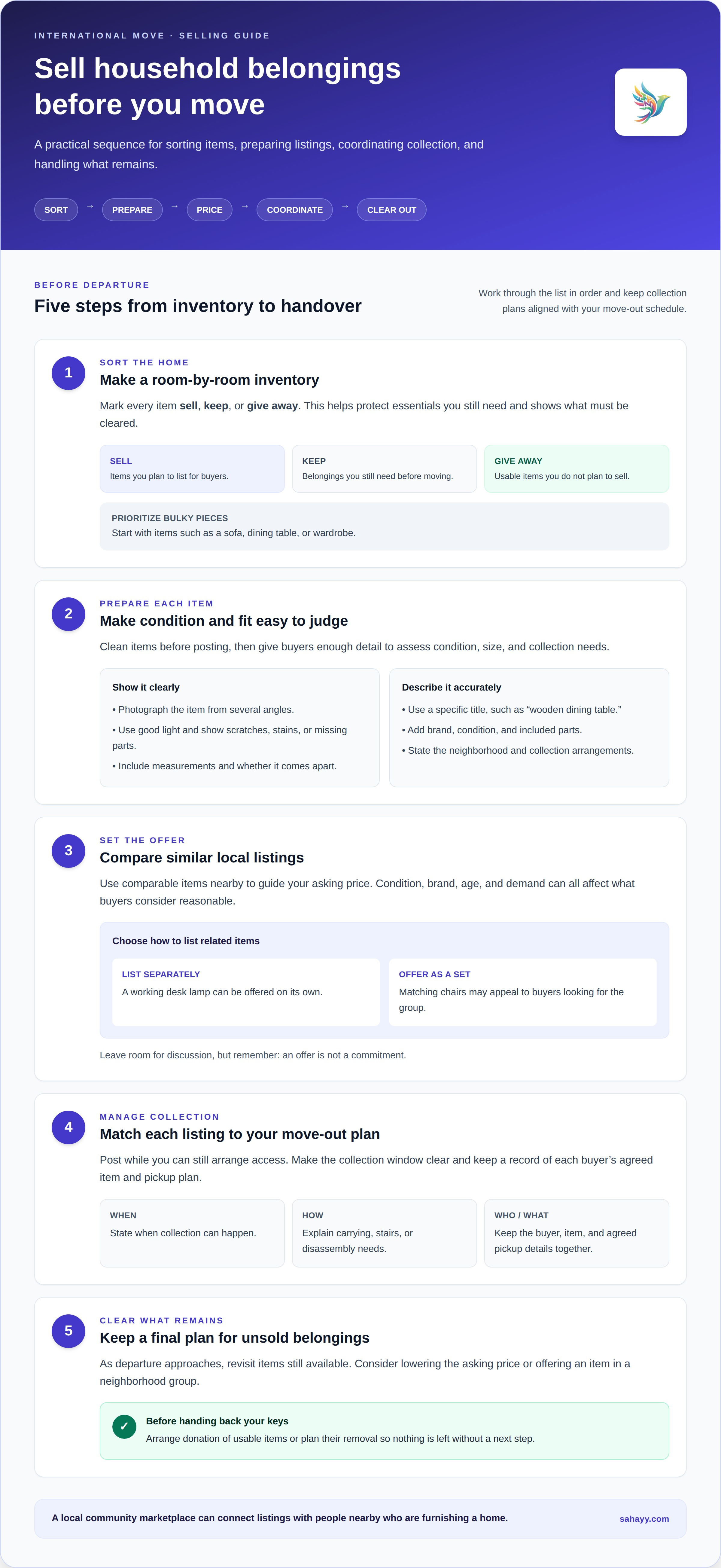
Make a room-by-room inventory before arranging your move. Mark each item “sell,” “keep,” or “give away,” then prioritize bulky pieces such as a sofa, dining table, or wardrobe. A clear list helps you avoid selling essentials you still need and identify items that may take longer to collect.
Prepare each item before posting. Wipe down a bookcase, photograph a chair from several angles, and note scratches, stains, or missing parts. Include measurements and say whether the item comes apart. Accurate details help buyers decide whether the furniture fits their space and vehicle, reducing unnecessary messages and failed pickup plans.
Set asking prices by comparing similar items in local listings. Condition, brand, age, and demand all affect what buyers may consider reasonable. For example, list a working desk lamp separately, but offer matching chairs together if buyers may want the set. Leave room for discussion, but don’t treat an offer as a commitment.
Coordinate listings with your move-out schedule. Post furniture while you can still arrange access, and state the collection window clearly. Keep a record of each buyer’s agreed item and pickup plan. If a table remains unsold as departure approaches, consider lowering the asking price or offering it in a neighborhood group.
For local visibility, a community marketplace can connect your listing with people nearby who are furnishing a home. Keep a final plan for belongings that remain, such as donating usable items or arranging their removal before handing back your keys.
Creating listings and selling items
A clear listing helps buyers assess an item before they message you. On an expat secondhand marketplace, useful details help newcomers decide whether a listing suits their home and plans.
Creating item listings
Use a specific title, such as “wooden dining table, seats four,” instead of “furniture.” Include the brand, measurements, condition, and any included parts. Photograph the front, sides, surface, and any damage in good light. For example, show a tabletop scratch clearly rather than relying on a general condition label.
State the asking price, neighborhood, and collection arrangements. Explain whether buyers need to carry the item downstairs or disassemble it. If you’re listing a set of chairs, say whether you’ll sell individual chairs. Clear terms help people browsing an expat secondhand marketplace understand the offer.
Selling rules and buyer protection
Rules for used furniture, electronics, and household goods depend on the marketplace and local requirements. Read the platform’s selling policies, describe each item accurately, and don’t list prohibited goods. For a used phone, disclose a cracked screen and include only accessories you actually have.
Be cautious of messages asking you to follow unfamiliar payment links, share verification codes, or pay unexpected fees. Confirm payment in your account before handing over an item, and keep transaction messages. Tax treatment depends on your location and circumstances, so record what you sold and consult local tax guidance for your situation.
For in-person selling, flea markets offer another route, and timing can affect how easily you connect with buyers. Prepare to display pieces clearly and answer questions about their condition and collection arrangements.
When deciding whether to sell or keep a sturdy piece, consider its potential lifespan: heirloom-quality flea-market items can last 50-100 years, compared with 5-10 years for modern fast furniture. That perspective can help sellers describe lasting quality accurately, without overstating an item’s condition or age.
Sahayy: Community Marketplace
Sahayy’s Community Marketplace gives people living abroad a place to post listings and connect with nearby communities. Turn to it when you’re furnishing a new home, looking for household items, or preparing belongings for a move. The Sahayy Mobile App brings the marketplace together with local community connections, while Event Discovery and Posting helps users find and share nearby events. Commy AI Assistant can answer queries in multiple languages, which can be useful when local terms or customs feel unfamiliar.
For example, a newcomer can browse listings for a desk, while someone preparing to relocate can post household items for local buyers. Keep listing details clear and communicate directly with interested community members to arrange the exchange.
Make your next move a local connection
A new home can become familiar through small, practical exchanges. A neighbor who buys a bookshelf may also share a useful tip about the area. Someone selling a lamp can learn what nearby residents need and pass along an item that still has plenty of use. An expat secondhand marketplace can support these everyday connections while helping you make thoughtful choices during a move. Each exchange can be a simple first step toward feeling more at home, whether you’ve just arrived or are preparing to leave.
As you plan what comes next, think beyond your belongings. A listing can start a conversation, and a local connection can make an unfamiliar place easier to navigate. Keep your next step manageable and let community grow through the practical ways people help one another.
Every new beginning starts somewhere. Yours can start with one helpful connection.
Frequently Asked Questions
Can I sell everything at once before I move out?
You can offer belongings together as a single lot, but buyers may want only selected pieces, so selling everything at once isn’t assured. Group related items, such as a dining table and matching chairs, and say whether you’ll split the set. Make a separate plan for essentials and anything left over, especially if your move-out date is fixed.
What is an expat marketplace?
An expat marketplace connects people living abroad through local listings for items and services. For second-hand goods, it gives residents a place to post belongings and find listings shared by others in their community. Sahayy’s Community Marketplace supports this kind of exchange, helping people connect over practical needs as they settle into or leave a neighborhood.
What are the best secondhand marketplaces for expats in the United States?
Browse local resale apps, classified websites, neighborhood groups, and community marketplaces. Search by item and neighborhood, then compare photos, condition, and pickup locations.

Article by
Vinay Patil
Vinay Patil is the founder of Sahayy, a community platform inspired by his own experience of moving to a new country and having to figure out things that someone already there could have answered in minutes. He believes that belonging is built through small acts of helping — sharing an event, answering a question, recommending a service, or simply connecting someone with the right people. With nearly two decades of experience in technology, Vinay is building Sahayy to make it easier for people to find trusted communities and feel at home, wherever they are in the world.
More at https://vinaypatil.com


