

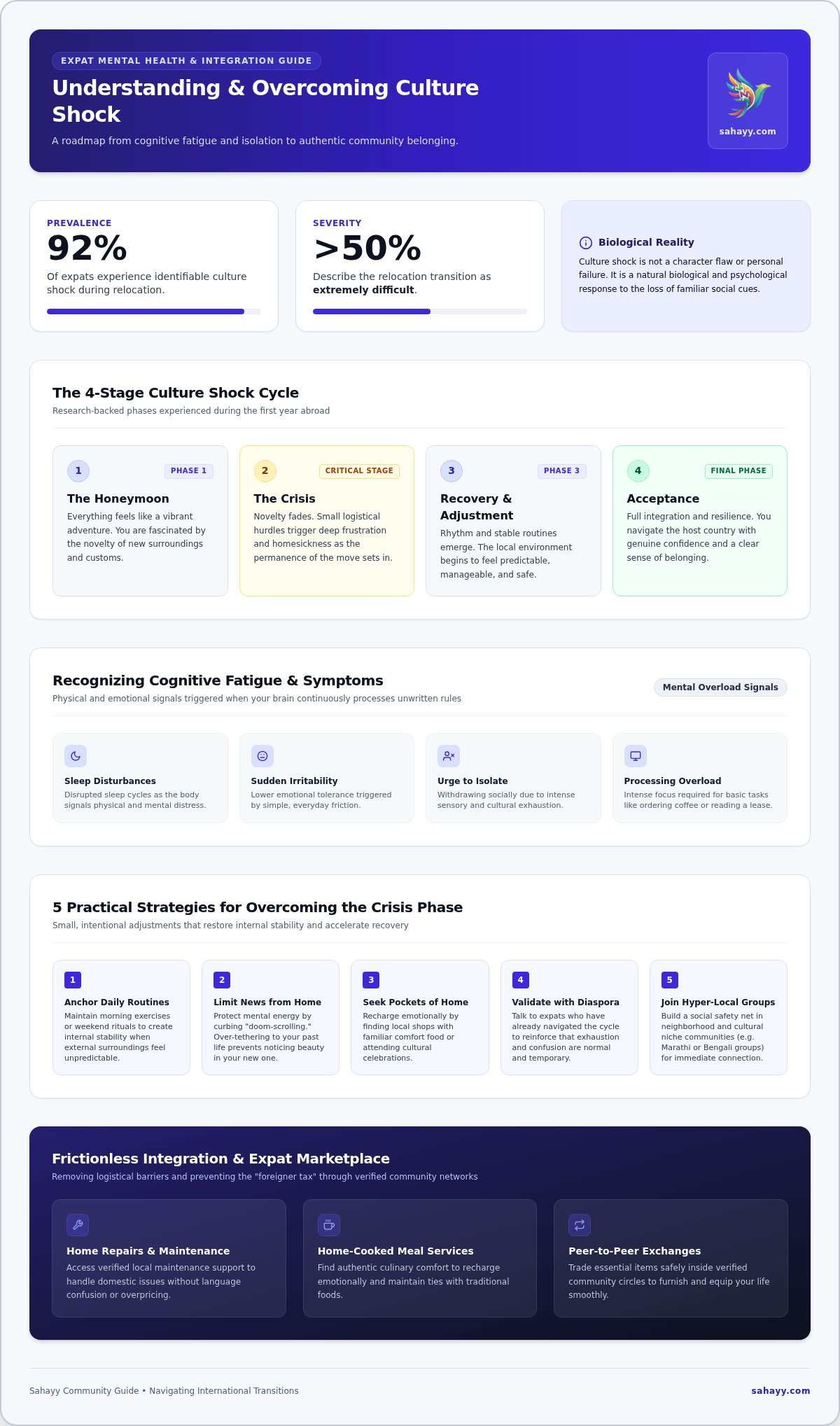
Over 92% of expats report experiencing identifiable culture shock, with more than half describing the transition as extremely difficult. If you're feeling like a perpetual outsider or find yourself exhausted by simple social norms, you aren't failing at your new life. It's a natural, biological response to a massive transition. We understand that the weight of homesickness can feel heavy, but these feelings are a sign that your mind is working hard to process a new environment.
This guide provides the validation you need and a roadmap for your recovery. You'll discover the four predictable stages of relocation and learn actionable, community-based strategies to turn your move into a successful integration. We'll explore practical ways to meet your tribe and use smart tools to make connection feel effortless. By the end, you'll have the steps to move from isolation to a true sense of belonging in your new home.
Key Takeaways
- Learn to identify the predictable stages of culture_shock to validate your feelings and see that your current exhaustion is a normal part of the transition.
- Discover how maintaining simple daily routines and limiting news from home can stabilize your emotional health during the challenging crisis phase.
- Explore how joining hyper-local groups and attending neighborhood events creates an immediate social safety net that speeds up your sense of belonging.
- Master the shift from being a temporary visitor to a confident local by using community-first tools that remove the friction of moving abroad.
What is Culture Shock? The Four-Stage Cycle Explained
Culture shock is the physical and emotional disorientation we feel when our familiar social cues vanish. It's a biological transition, not a character flaw. It's the weight of navigating a world where every unwritten rule has changed. Research shows that most expats move through four distinct phases of culture shock during their first year abroad.
- The Honeymoon: Everything feels like a vibrant adventure. You're fascinated by the novelty of your new surroundings.
- The Crisis: The novelty fades. Small logistical hurdles trigger deep frustration. Homesickness sets in as you realize the move is permanent.
- Recovery and Adjustment: You find your rhythm. Routines emerge, and the local culture starts to feel predictable and safe.
- Acceptance: You feel integrated and resilient. You're now navigating your host country with genuine confidence.
Identifying the Symptoms: Emotional and Physical Signs
Your body often signals distress before your mind catches up. Common signs include sleep disturbances, sudden irritability, and a strong urge to isolate. These aren't signs of weakness. They're symptoms of cognitive fatigue. This is the mental exhaustion caused by constantly processing new social cues. Every interaction, from ordering coffee to reading a lease, requires intense focus. Your brain is working overtime.
Culture shock is not a personal failure, but a natural psychological response to the loss of familiar social cues. Recognizing these symptoms early allows you to move from survival mode into active integration. It's the first step toward reclaiming your sense of self in a new city.
5 Practical Strategies for Overcoming the Crisis Phase
The transition from excitement to frustration is a hallmark of the stages of cultural adjustment. When culture_shock hits its peak, small actions create big shifts. First, anchor your day with familiar routines. Whether it's a specific morning exercise or a weekend ritual, these habits provide a sense of internal stability when the world outside feels unpredictable. It's about creating a safe harbor in a sea of change.
Second, protect your mental energy by limiting "doom-scrolling" news from home. It's easy to stay tethered to your past life, but it prevents you from noticing the beauty in your new one. Third, seek out "pockets of home." Finding a shop that sells your favorite comfort food or attending a cultural celebration can provide a much-needed emotional recharge. Fourth, validate your experience with the local diaspora. Talking to those who have already navigated culture_shock reminds you that your feelings are temporary and normal.
The Power of Shared Experience in Social Integration
Finally, building a support network abroad is the most effective way to move from crisis to recovery. You need people who understand the unwritten rules of your new city. Many traditional social apps feel too broad, so look for Meetup alternatives for expats that focus on your specific cultural niche. These groups provide immediate social safety and practical advice. You can begin exploring these neighborhood-level connections through safe community platforms designed for newcomers.
Leveraging Sahayy to Navigate Your New Community
Sahayy is built to be your companion through the toughest parts of relocation. It acts as a bridge that helps you navigate the complexities of culture_shock with ease. While the Department of State guide to adjusting abroad emphasizes social connection, Sahayy makes it instantaneous and frictionless. You don't have to navigate the city alone or wait months to find your tribe. Joining hyper-local groups like the Marathi or Bengali communities gives you an immediate circle of people who share your language and values. This is the heart of inclusive community building. It's about finding safety in shared experiences while you find your feet.
Settling in also means handling practical logistics without being overcharged or misled. The Sahayy marketplace connects you with verified local services and peer-to-peer transactions. You can find essential resources you need to build your life, such as:
- Home repairs and verified maintenance help
- Authentic, home-cooked meal services
- Safe peer-to-peer item exchanges
This prevents the common "foreigner tax" that many expats face when they're still learning the local market. It's a way to reclaim your sense of security and financial ease during the height of culture_shock. You're no longer an outsider guessing at prices; you're a member of a protected ecosystem.
Commy AI: Your Multilingual Guide to Local Norms
Small daily interactions often cause the most anxiety for newcomers. Sahayy's AI assistant, Commy, acts as your 24/7 local expert. You can ask cultural etiquette questions in your native language and get instant, relevant answers. Whether you're unsure about local tipping customs or need help translating a complex utility bill, Commy removes the barriers to understanding. It's like having a supportive neighbor in your pocket, ready to guide you through every unfamiliar social cue with patience and precision.
Your Path to a New Home Starts Here
Navigating your relocation is about more than just finding a flat; it's about finding your people. By understanding the predictable cycle of culture_shock, you can transform moments of frustration into growth. You've learned that maintaining routines and seeking out your local diaspora are vital steps toward feeling secure. Integration doesn't have to be a lonely struggle when you have the right support system by your side.
Sahayy provides the digital infrastructure for this journey. Our free multilingual AI assistant, verified local community groups, and secure expat-focused marketplace help you settle in with confidence. These tools bridge the gap between being a visitor and becoming a valued neighbor. We're here to ensure your transition is as smooth as possible.
You're capable of thriving in your new environment. With a supportive community to welcome you, your new city will feel like home sooner than you think.
Frequently Asked Questions
How long does culture shock typically last for new expats?
Most expats find that the acute phases of culture_shock last between six months and one year. However, the timeline is deeply personal. While the "Crisis" phase might peak around the three-month mark, recovery often begins as you build a local support network. Consistent community engagement can significantly shorten this period of adjustment by fostering a sense of belonging and predictability.
What are the most common physical symptoms of culture shock?
Physical symptoms often mirror high stress levels. Common signs include chronic fatigue, frequent headaches, and disrupted sleep patterns. You might also experience changes in appetite or digestive issues. These are not just in your head; they're your body's response to the constant cognitive load of navigating unfamiliar environments. Rest and routine are essential tools for managing these physiological reactions.
Can culture shock happen even if you move to a country that speaks the same language?
Yes, culture_shock frequently occurs even without a language barrier. Moving between two English-speaking countries, for example, can be surprisingly difficult because you expect things to be identical. Differences in social etiquette, work culture, and administrative systems can cause significant frustration when they don't align with your previous expectations. These subtle differences often require more mental energy to process than obvious ones.
How can I find people from my own country when I feel homesick?
Finding your tribe is easiest through dedicated community platforms. You can use the Sahayy App to discover verified local community groups and diaspora events in your neighborhood. Joining niche groups, such as Marathi or Bengali communities, provides immediate social safety. Connecting with people who share your heritage helps validate your feelings and reduces the heavy weight of homesickness.

Article by
Vinay Patil
Vinay Patil is the founder of Sahayy, a community platform inspired by his own experience of moving to a new country and having to figure out things that someone already there could have answered in minutes. He believes that belonging is built through small acts of helping — sharing an event, answering a question, recommending a service, or simply connecting someone with the right people. With nearly two decades of experience in technology, Vinay is building Sahayy to make it easier for people to find trusted communities and feel at home, wherever they are in the world.
More at https://vinaypatil.com


