

What if the best way to make friends in Germany isn’t to attend more events, but to return to one familiar place each week? Moving can leave you feeling isolated, especially when daily routines are new and language differences make starting a conversation feel daunting. This moving to Germany social guide shows you how to find welcoming groups, meet people through shared interests, and build connections at a comfortable pace.
Belonging usually grows through small, repeated moments, not pressure to make instant friendships. You’ll find practical ways to search for local and international communities, choose recurring activities, and turn first conversations into familiar faces. Sahayy brings local events and groups together in one app, and its multilingual AI assistant can answer questions as you explore. Start with one activity, return if it feels right, and let your social circle grow naturally.
Key Takeaways
- Shared interests make first conversations easier by giving you something specific to talk about.
- Use this moving to Germany social guide to choose an activity, find a local group, try it once, and return if it feels right.
- Try sports, board games, language exchanges, cultural groups, or volunteering to find a setting that suits you.
- Search local event calendars and interest groups for nearby opportunities. Sahayy brings community resources together in one app.
Moving to Germany: Why social connection matters after arrival
Once the practical tasks of a move are done, a different challenge can surface: everyday life still feels unfamiliar, and there may be no one to call for a casual coffee or a quick question. That feeling doesn’t mean you’re doing anything wrong. Building a social circle takes time, especially when you’re learning how people connect in a new place. Shared interests can ease the first conversation because the activity itself gives you something to talk about.
Start with a small, practical goal: find one group or activity that feels welcoming enough to try. You don’t need to leave with a best friend. Showing up, learning names, and deciding whether you’d like to return all count as progress. Taking this approach can make building a support network abroad feel more manageable.
What makes social life in Germany easier to navigate?
Recurring activities give you a natural reason to see the same people again. A weekly class, sports session, or board-game evening can turn a brief introduction into an easier conversation the next time you meet. Local clubs, often called Vereine, are one way to connect through shared interests, from sport to arts and culture. Each group has its own atmosphere, so stay curious rather than assuming one social style fits everyone.
For broader context, Integration of immigrants in Germany explores the wider social and historical picture. Your experience will be local and personal. Use this moving to Germany social guide to start with something you genuinely enjoy, then give a promising group more than one chance before deciding whether it fits.
How to find welcoming groups and events in your German city
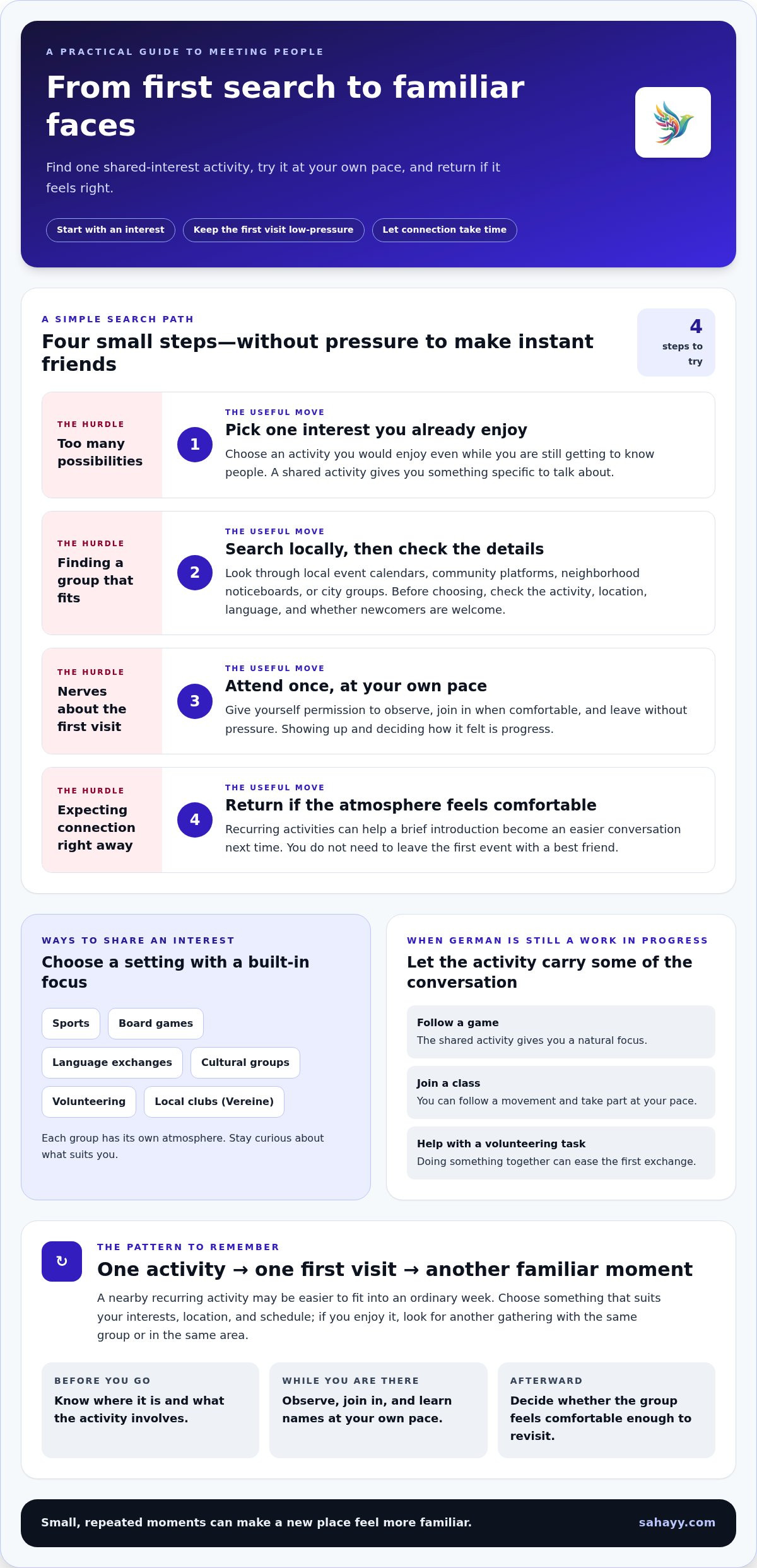
Make the search manageable by starting with an interest you already enjoy. Look for activities near home or work through local event calendars, community platforms, neighborhood noticeboards, or city groups. Sports, board games, language exchanges, cultural groups, and volunteering all give you a shared focus. In Berlin, for example, you can browse Berlin community groups to see how local options are organized.
- Pick one interest. Choose an activity you’d enjoy even if you’re still getting to know people.
- Search locally. Check the group’s activity, location, language, and whether newcomers are welcome.
- Attend once. Give yourself permission to observe, join in at your own pace, and leave without pressure.
- Decide whether to return. If the atmosphere feels comfortable, another visit can make the next conversation easier.
Can you meet people in Germany before speaking fluent German?
Yes. A shared activity can carry some of the conversation: follow a game, copy a movement in a class, or help with a volunteering task. A smile and a few simple phrases, such as “Hello,” “Could you help me?” or “Is this seat free?”, can open the door. Look for groups that welcome international participants or communicate in a language you know. You can also explore practical ideas for building a support network abroad as you find your footing.
Keep your first visit low-pressure. Sahayy helps you discover community events and groups, alongside services and a marketplace, in one app. Browse community options with Sahayy to find local connections.
Turn first connections into a social routine with local discovery tools
A promising event is easier to attend when you can find it without searching through scattered posts and group chats. Local event calendars and interest groups help you spot options near home, work, or a familiar transit stop. Consider location when choosing: an activity nearby may be easier to fit into an ordinary week than an outing that takes extra planning.
Once you find an option, make participation part of your routine. Choose an event that suits your interests and schedule, note where it is, and decide what would help you feel comfortable attending. If you enjoy it, look for another gathering from the same group or in the same area. A simple plan can turn discovery into regular involvement without expecting one event to create an instant circle of friends.
How can a community app support your move to Germany?
A community app can bring local events and groups together, so you can explore what’s nearby and choose how much to participate. Sahayy also brings services and a marketplace into one app, helping you discover different parts of local community life in one place. Its multilingual AI assistant, Commy, answers user queries in multiple languages, making it easier to explore information in a language you know.
When choosing an outing, consider what would make it manageable: a convenient location, a clear activity, and a time that works for you. Then take the next step at your own pace. If you’d like one place to begin exploring, explore Sahayy’s community options. This moving to Germany social guide is about making connection easier to pursue, one local choice at a time.
Let your new routine grow one step at a time
You don’t have to build a whole social circle at once. Choose one manageable next step, then give yourself room to see where it leads. A familiar activity, a friendly exchange, or a useful local discovery can help a new city feel more personal over time. This moving to Germany social guide is a starting point, not a test of how quickly you belong.
Sahayy brings local events, groups, services, and a marketplace together in one platform, with core app features free. Commy AI can answer user queries in multiple languages, giving you another way to explore community information as you settle in.
Take the next step at your own pace. The connections that make a place feel like home can begin with one small yes.
Frequently Asked Questions
How can I meet people after moving to Germany?
Start by creating small opportunities for conversation in places you already visit. Ask a coworker to join you for lunch, introduce yourself to a neighbor in your building, or invite someone you’ve met to explore a nearby market. A simple follow-up message after a pleasant chat can help keep the connection going. Focus on one genuine next step rather than filling your calendar.
Can I make friends in Germany if I do not speak German fluently?
Yes, you can start forming friendships while your German is still developing. Look for international meetups, language exchanges, or activities where people use a language you’re comfortable speaking. If you’re unsure, ask politely whether English is okay before settling into a conversation. You can also prepare a few phrases for introductions and for clarifying when you haven’t understood something. Curiosity and patience matter more than perfect grammar.
Where can newcomers find local groups and events in Germany?
Check city and neighborhood noticeboards, community centers, libraries, university event pages, and local club directories. Searching online with your district name and an interest, such as “hiking” or “choir,” can narrow the results. German words for “club” or “community center” may also surface local listings. Compare locations and meeting formats with your schedule, then save a couple of options to explore.
How long does it take to feel at home after moving to Germany?
There’s no set timeline. Feeling settled can come gradually as familiar places, friendly greetings, and dependable routines begin to build. Notice small signs of progress: you know which route to take, recognize someone at a regular activity, or feel comfortable asking a neighbor a question. If it’s taking longer than you hoped, that doesn’t mean you’re failing. Adjust your routine and give new connections time to develop.

Article by
Vinay Patil
Vinay Patil is the founder of Sahayy, a community platform inspired by his own experience of moving to a new country and having to figure out things that someone already there could have answered in minutes. He believes that belonging is built through small acts of helping — sharing an event, answering a question, recommending a service, or simply connecting someone with the right people. With nearly two decades of experience in technology, Vinay is building Sahayy to make it easier for people to find trusted communities and feel at home, wherever they are in the world.
More at https://vinaypatil.com


