

What if the best way to find language exchange partners isn’t to swipe through endless profiles, but to start with the kind of conversation you actually want? Finding someone with compatible language goals, a workable schedule, and shared interests can take time. Even a promising match may lose momentum if you don’t agree on a routine that suits you both.
This guide will help you choose a partner whose goals complement yours, break the ice, and plan a simple, balanced practice routine. You’ll also find ways to use local groups and events to make regular conversation feel more natural. Sahayy brings local events and groups together in one community app, and its multilingual Commy assistant answers local questions in multiple languages. Start with a shared interest, agree on a steady rhythm, and let conversation grow into community.
Key Takeaways
- To find language exchange partners who fit, look for shared learning goals, compatible schedules, and interests you can talk about together.
- Start with a simple plan: share your goals, choose a format, divide practice time fairly, and agree on when to meet again.
- Use familiar topics and easy prompts to make the first conversation more relaxed and give both people a natural way to participate.
- Explore local groups and events for more chances to connect. Sahayy helps people discover community, and shared interests can be a starting point for language practice.
Where to Find Language Exchange Partners Who Match Your Goals
Finding someone to practise with is easier when your target languages, schedules, and interests line up. Online searches can help you find people by language and location, then start with a message before arranging a call. A matching profile alone won’t tell you whether conversation will flow, so ask about the other person’s goals and preferred way to practise before setting a regular schedule.
Local cultural communities and interest-based meetups offer another way to connect. A cooking group, walking club, or community event gives you a shared activity to talk about, which can take pressure off a first conversation. Sahayy brings local groups and events together for people living abroad, helping you discover community settings and meet people with shared interests. These connections can also support building a support network abroad, with language practice as one possible starting point.
Language exchange is reciprocal: each person practises a language and supports the other’s learning. For a concise overview of the idea and its potential benefits and challenges, see What is Language Exchange?
What makes a language exchange partner a good fit?
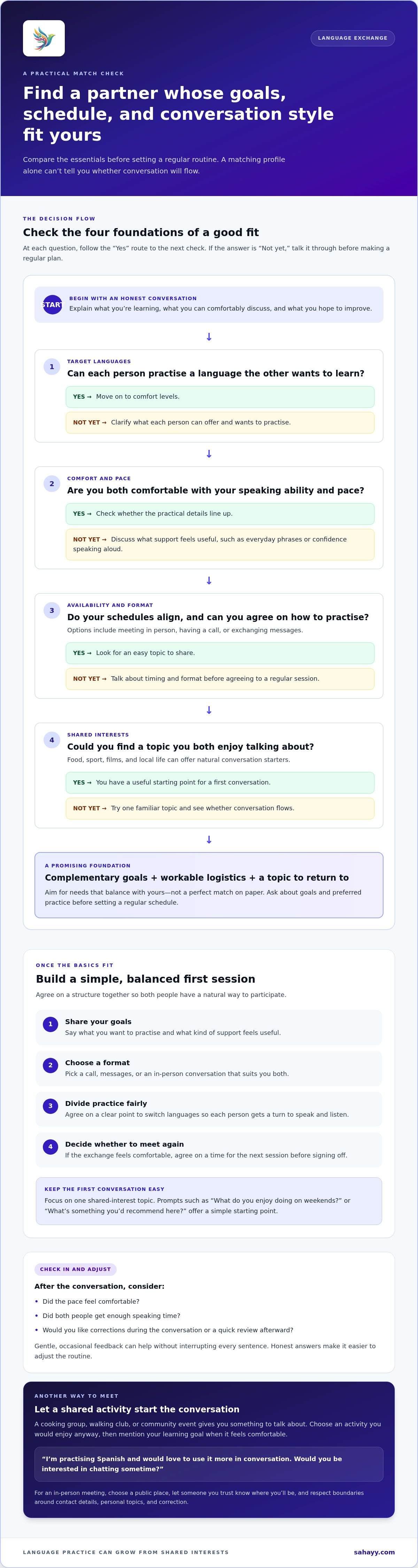
Before agreeing to regular sessions, compare the basics. Explain what you’re learning, what you can comfortably discuss, and what you hope to improve. For example, one person might want to practise everyday conversations while the other wants to build confidence speaking casual English.
- Target languages: Can each person offer practice in a language the other wants to learn?
- Comfort levels: Are you both comfortable with your current speaking ability and pace?
- Availability and format: Do your schedules align, and would you rather meet in person, call, or exchange messages?
- Shared interests: Could food, sport, films, or local life provide easy conversation topics?
Complementary goals make the exchange feel mutual, while common interests give you something to return to when conversation slows. Aim for a partner whose learning needs balance with yours, rather than holding out for a perfect match on paper.
How to Start a Language Exchange and Keep It Balanced
A clear plan helps a first conversation feel less like an interview and makes it easier for both people to take part. Before you meet, agree on a simple structure together:
- Share your goals. Explain what you want to practise and what kind of support feels useful, such as help with everyday phrases or confidence speaking aloud.
- Choose a format. Pick a call, messages, or an in-person conversation, based on what suits you both.
- Divide the practice fairly. Agree on a clear point to switch languages so each person gets a turn to speak and listen.
- Choose the next session. If the exchange feels comfortable, agree on a time to meet again before signing off.
Keep the first meeting focused on one shared-interest topic, such as favourite foods, films, or exploring your city. Useful prompts include “What do you enjoy doing on weekends?” and “What’s something you’d recommend here?” A familiar subject gives you both an easy starting point. If conversation pauses, follow up with a question about a detail in the other person’s answer.
How can you make the first conversation feel mutual?
Agree beforehand on whether you want corrections during the conversation or a quick review afterward. Gentle, occasional feedback can help without interrupting every sentence. Keep the first exchange focused, follow your language-switching plan, then check in: Did the pace feel comfortable? Did both people get enough speaking time? Would you like to continue? Honest answers make it easier to adjust the routine.
For more ways to meet people through local connections, explore this modern guide to networking abroad. To discover local groups and events where conversation can grow naturally, explore Sahayy’s community app. Shared community connections can give you a starting point to meet potential language exchange partners and arrange a practice routine together.
Use Local Communities to Find More Language Practice Opportunities
Conversation doesn’t have to begin with a formal language exchange. A hobby group or community event gives you a shared activity to focus on, so talking can feel less like a lesson and more like a natural part of meeting people. A cooking gathering might prompt a conversation about ingredients, while a walking group can bring up local places and weekend plans. Start by choosing an activity you enjoy, then see whether someone else is interested in practising together.
How can local groups turn shared interests into conversation practice?
Choose a group you’d enjoy even if language practice weren’t part of the plan. Once you feel comfortable, mention your learning goal in a low-pressure way: “I’m practising Spanish and would love to use it more in conversation. Would you be interested in chatting sometime?” This makes your intention clear and gives the other person room to say yes or no.
Keep the first in-person meeting practical and respectful. Choose a public place, let someone you trust know where you’ll be, and agree on a setting that feels comfortable to both of you. Respect boundaries around contact details, personal topics, and how much correction either person wants. A friendly introduction is enough; there’s no need to turn every community interaction into a practice session.
Sahayy helps people living abroad discover local groups and events, creating ways to connect around shared interests. You can introduce your language-learning goal to people you meet and arrange practice together. Commy, Sahayy’s multilingual AI assistant, answers local questions in multiple languages. Explore community opportunities on Sahayy. Finding language exchange partners can start with an online search, while a local interest can give your first conversation a welcoming place to begin.
Make Your Next Conversation a Small, Doable Step
You don’t need a perfect plan before you begin. Choose one next step: reach out to someone whose language goals complement yours, suggest a brief conversation, or attend a local activity you genuinely enjoy. The first exchange can help you learn what feels comfortable and what you’d like to practise next. From there, agree on a routine that works for both of you.
If you’re living abroad, Sahayy offers a place to discover local groups and events, with core features available for free. Commy can also answer local questions in multiple languages. Use these community tools to find settings where conversation may grow naturally, then invite someone to practise with you. Explore Sahayy to connect with local communities as you look to find language exchange partners and build confidence through real interactions.
Every meaningful exchange starts with a first hello. Take yours at your own pace, and let curiosity lead the way.
Frequently Asked Questions
Can beginners find language exchange partners?
Yes, beginners can find language exchange partners by being clear about what they can comfortably practise. Start with familiar subjects, such as meals, daily routines, or introductions, and prepare a few useful phrases or questions in advance. Let your partner know you may need extra time to respond, and ask what kind of corrections they find helpful. The aim is shared practice, not perfect fluency.
Is language exchange free?
It depends on how you connect and what you choose to do together. A peer-to-peer conversation can happen without paid lessons, while travel, an event, or optional platform services may involve costs. Before making plans, agree on whether you’ll meet online or in person and discuss any expected expenses. That simple conversation helps both partners feel comfortable about the arrangement.
How often should language exchange partners meet?
There’s no single schedule that works for everyone. Choose a rhythm that fits both people’s routines, then review it after a few conversations. For example, a brief check-in during a busy week may be easier to keep up than setting aside a long session. If plans change, discuss a new time rather than letting uncertainty build. Mutual agreement matters more than a fixed weekly rule.
Can language exchange partners meet in person safely?
Yes, partners can take practical steps to reduce avoidable risks. Choose a public place, tell someone you trust where you’re going, and keep the first meeting low-pressure, such as a short chat in a café. Respect each other’s boundaries and move at a pace that feels comfortable. If meeting in person doesn’t feel right, start with an online conversation instead.

Article by
Vinay Patil
Vinay Patil is the founder of Sahayy, a community platform inspired by his own experience of moving to a new country and having to figure out things that someone already there could have answered in minutes. He believes that belonging is built through small acts of helping — sharing an event, answering a question, recommending a service, or simply connecting someone with the right people. With nearly two decades of experience in technology, Vinay is building Sahayy to make it easier for people to find trusted communities and feel at home, wherever they are in the world.
More at https://vinaypatil.com


