

The best Eventbrite alternative for a neighborhood gathering may not be another ticketing platform. If you’re comparing Eventbrite alternatives for community events, start with what you need people to do: discover a gathering, register or pay, get event updates, or stay connected afterward.
A small meetup may need little more than a clear listing and a way for interested people to connect. A paid public event may require registration, capacity management, and a check-in process. When event listings are separated from the groups they serve, local participants can also miss the context that helps them feel welcome. Organizers need to match the tools to the event, rather than take on features they won’t use.
This guide compares platforms by practical needs, so you can choose based on the work involved. It covers where ticketing tools help and how Sahayy supports local event discovery as part of a wider community experience. Sahayy brings local events, groups, and services together for people living abroad, helping them connect beyond a single gathering.
Key Takeaways
- Match the platform to the event’s purpose: discovery, ticket sales, attendee management, or ongoing connection.
- Compare event format, audience, ticketing needs, and local discovery goals before choosing a tool.
- When comparing Eventbrite alternatives for community events, look beyond registration to recurring-event setup, communication, accessibility, and language needs.
- Sahayy connects local events with groups, services, and a marketplace, supporting community discovery beyond a single gathering.
Eventbrite Alternatives for Community Events: Start With the Job to Be Done
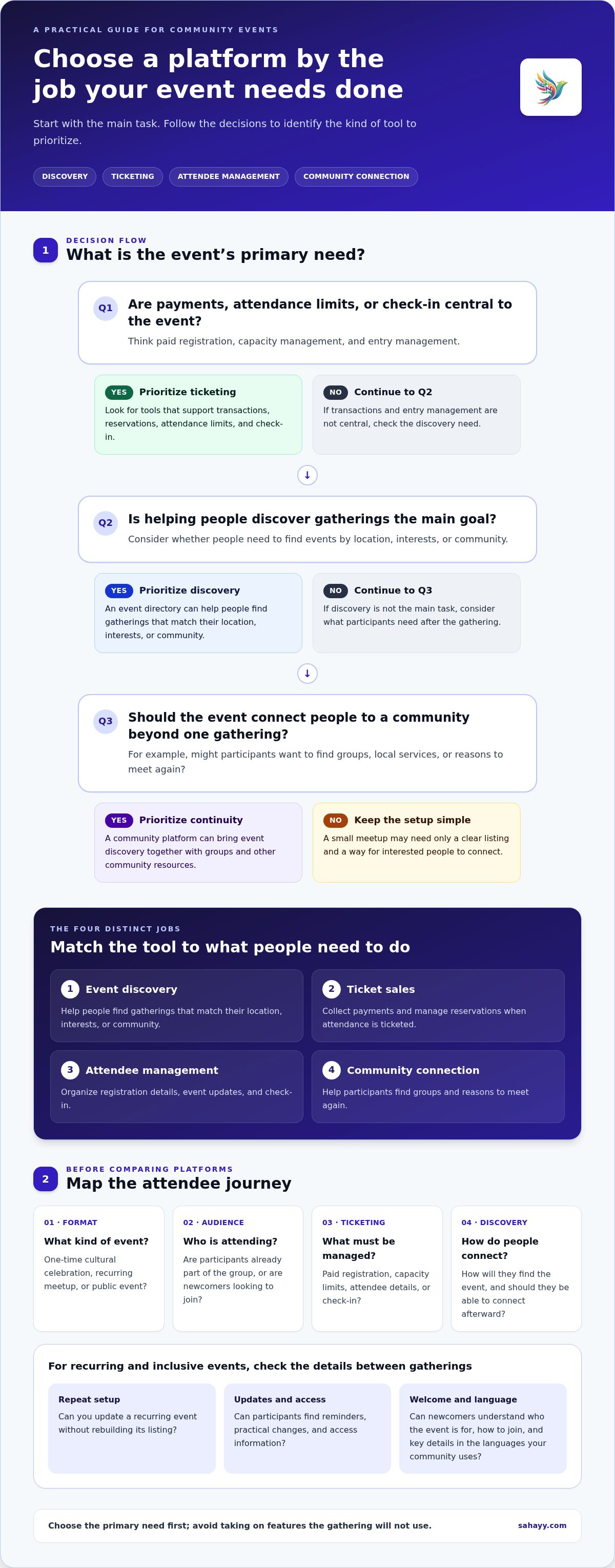
A neighborhood gathering and a public ticketed event need different workflows. One may depend on helping nearby people discover a welcoming session. The other may require paid registration, attendance limits, and a clear check-in process. Before comparing Eventbrite alternatives for community events, identify which tasks the platform needs to handle.
Break the work into four parts:
- Event discovery: Help people find gatherings that match their location, interests, or community.
- Ticket sales: Collect payments and manage reservations when attendance is ticketed.
- Attendee management: Organize registration details, event updates, and check-in.
- Community connection: Help participants find groups and reasons to meet again.
One event may need several of these, but they are distinct jobs. Event management principles cover planning and coordination; choose a platform by first listing the tasks that matter for this gathering.
Ticketing platform or community discovery platform?
Prioritize ticketing when payments, attendance limits, or check-in are central to the event. For a recurring cultural gathering, local discovery and context may matter just as much. People need to know who the session is for, where it is, and how to take part. Community-based options can make that connection part of a wider local experience, offering tailored discovery for expatriates and locals alike.
For example, someone seeking a cultural gathering in Berlin can browse Indian events in Berlin. An organizer can consider how event discovery fits alongside ongoing community participation.
Use the event’s main need to narrow your options: ticketing tools for transactions and check-in, event directories for discovery, and community platforms for continuity. Some platforms cover more than one job. Starting with the primary need helps a small gathering avoid unnecessary complexity.
How to Compare Eventbrite Alternatives for Your Community
Compare platforms against the attendee journey, not a long feature list. Map what happens before, during, and after the event, then look for a tool that supports those steps without adding work your team doesn’t need.
- Define the format: Is this a one-time cultural celebration, a recurring meetup, or a public event?
- Know the audience: Are participants already part of the group, or are newcomers looking for a way to join?
- Set ticketing needs: Decide whether you need paid registration, capacity limits, attendee details, or check-in.
- Clarify discovery goals: Identify how people will find the event and whether you want to help them connect afterward.
Then compare the details that affect repeat participation. Can you update a recurring event without rebuilding its listing? Can participants find reminders and practical changes? Is information about access easy to locate? Can people understand the event’s purpose and community context before deciding to attend? Test each platform against the real path from finding an event to choosing to return.
A practical checklist for recurring and inclusive events
For recurring events, consider what participants need between gatherings as well as on the day. Newcomers should be able to understand who the event is for, where it takes place, and how to join in. Clear, welcoming details make it easier for people to decide whether the event is right for them, especially when they are building local connections in a new place.
- Do participants need event listings, groups, local services, or several resources together?
- Can people understand key details in the languages your community uses?
- Does the experience support connection after the event ends?
A guide to finding local events can help newcomers look beyond a single listing. If community discovery is part of your event journey, explore how Sahayy brings local connections together.
Where Sahayy Fits Among Eventbrite Alternatives
Sahayy is a community platform for people living abroad, bringing local events, groups, services, and a marketplace together in one app. For organizers comparing Eventbrite alternatives for community events, Sahayy provides a way to share and discover local gatherings in a broader community setting.
That context can be useful for cultural events. A listing helps someone discover a gathering, while related community information can point them toward groups and local resources. For example, Indian community events in Berlin gives people a place to explore local gatherings. The focus is on connecting event discovery with a wider sense of belonging, rather than treating every event as an isolated listing.
From finding one event to joining a local community
After discovering an event, participants may want to find a group that shares their interests or explore services and other community resources. Sahayy brings these connections into one app, giving people a way to engage beyond a single visit. Its Commy AI assistant answers queries in multiple languages and can help users find relevant community information.
For a cultural organizer, this wider context can help newcomers see how one gathering fits into local life. When payments and entry management are the main requirements, assess those needs directly. When local discovery and continued connection matter, Sahayy brings events together with groups and other community resources. Its core features are free, with a focus on privacy, safety, and inclusive community building.
To find community connections near you, explore Sahayy.
Choose a Platform That Helps Your Community Take Its Next Step
The right platform does more than put an event on a calendar. It makes the next step clear, whether that means registering, finding the gathering, or coming back to connect again. As you weigh Eventbrite alternatives for community events, consider what you want participants to be able to do after they first hear about your event.
Start with one practical question: what would make it easier for the people you want to welcome to take part? Use the answer to choose the tools that fit your event and help it become part of a connected local experience. You don’t need to build everything at once. A thoughtful first gathering can give people a reason to return.
Welcoming moments can help people feel at home and bring neighbors closer.
Frequently Asked Questions
Is Eventbrite a good choice for small community events?
Eventbrite can suit a small community event when the organizer needs public visibility, paid registration, or a managed attendee list. For a free monthly book circle, those tools may be more than the host needs. Map the tasks for one event, including sign-ups, reminders, and last-minute changes, then choose a tool that handles them simply.
Can a community platform replace an event ticketing platform?
It depends on what the event requires. A casual cultural meetup may need a place to share details and help participants find one another. A concert with paid admission has additional needs around transactions and entry. Organizers can use one platform for discovery and another for ticket transactions when that better fits the event.
What should I look for in an Eventbrite alternative for community events?
When comparing Eventbrite alternatives for community events, follow the attendee’s steps from finding the listing to receiving updates and knowing what to expect. Check how recurring dates are handled, whether event details are easy to read on mobile, and whether access information is easy to find. For multilingual communities, consider how participants can understand essential details and ask questions.
How can newcomers find community events in a new city?
Start with an interest or cultural connection, then read the listing for practical details such as the intended audience, location, and participation instructions. Sahayy lists Indian community events in Berlin, giving newcomers a concrete starting point. Exploring related local groups can help turn a first visit into an ongoing connection.

Article by
Vinay Patil
Vinay Patil is the founder of Sahayy, a community platform inspired by his own experience of moving to a new country and having to figure out things that someone already there could have answered in minutes. He believes that belonging is built through small acts of helping — sharing an event, answering a question, recommending a service, or simply connecting someone with the right people. With nearly two decades of experience in technology, Vinay is building Sahayy to make it easier for people to find trusted communities and feel at home, wherever they are in the world.
More at https://vinaypatil.com


